10 Best Budget Mountain Bikes 2026 (Beginners Friendly Picks)
The 10 best budget mountain bikes of 2026, from the $599.99 Trek Marlin 4 to a $2,200 full-suspension Giant Stance. Current models, with prices and specs checked on the makers’ sites.
Updated · 14 min read
How we make money: if you buy through a link on this page, we may earn a commission at no extra cost to you. It never decides which bikes we pick. Disclosure
In this article
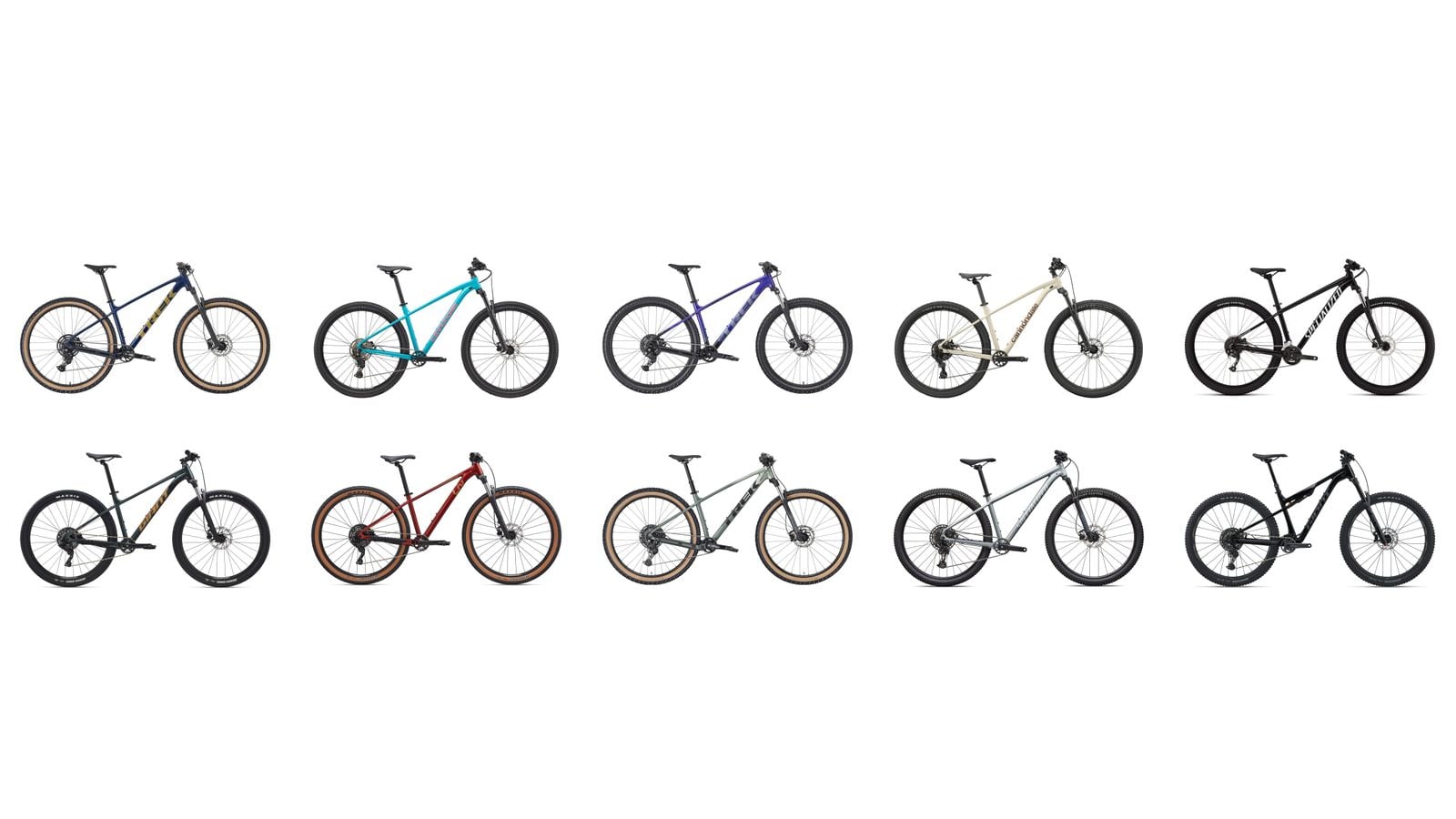
A good budget mountain bike in 2026 costs about $600 to $1,000. That buys an aluminum hardtail from a major brand with a suspension fork, wide tires, and, on most of the bikes below, hydraulic disc brakes and a single-chainring drivetrain: the parts that used to be reserved for bikes twice the price.
We picked ten budget mountain bikes from Trek, Cannondale, Specialized, Giant and Liv, from a $599.99 hardtail to a $2,200 full-suspension bike, and checked every price and spec on the manufacturer’s US website on November 17, 2026. We haven’t ridden these exact bikes for this guide, so we don’t claim to have tested them; the picks are based on their published components, sizes, weights and prices, and what those mean on the trail.
The best budget mountain bikes at a glance
| Bike | Best for | Price | Fork | Gears | Brakes | Weight |
|---|---|---|---|---|---|---|
| Trek Marlin 5 (Gen 3) | Best overall | $799.99 | Coil, 100 mm | 1×9 | Hydraulic | 33.3 lb (M) |
| Cannondale Trail 2 | Marlin 5 alternative | $799 | Coil, 100 mm | 1×9 | Hydraulic | Not published |
| Trek Marlin 4 (Gen 3) | Under $600 | $599.99 | Coil, 100–110 mm | 1×8 | Hydraulic | 32.9 lb (M) |
| Cannondale Trail 3 | Under $700 | $649 | Coil, 100 mm | 1×8 | Mechanical | Not published |
| Specialized Rockhopper | Two chainrings | $749.99 | Coil, 80–100 mm | 2×9 | Hydraulic | 31.1 lb (M) |
| Giant Talon 2 | Tires for the money | $800 | Coil, 100 mm, thru-axle | 1×9 | Hydraulic | 31.1 lb (M) |
| Liv Tempt 2 | Women | $800 ($700 on sale) | Coil, thru-axle | 1×9 | Hydraulic | Not published |
| Trek Marlin 6 (Gen 3) | Dropper post | $999.99 | RockShox Judy coil, 100 mm | 1×10 | Hydraulic | 33.1 lb (M) |
| Specialized Rockhopper Comp | Air fork under $1,000 | $999.99 | RockShox Judy air, 80–100 mm | 1×12 | Hydraulic | 29.4 lb (M) |
| Giant Stance | Full suspension | $2,200 | Air, 140 mm (130 mm rear) | 1×10 | Hydraulic | Not published |
US list prices on the manufacturers’ websites on November 17, 2026. Weights are the makers’ figures for a size M; Cannondale and Giant don’t publish weights for every model. “1×9” means one chainring and nine gears at the back.
What changed since our last update: the Diamondback Hook, Line and Atroz 2 we used to recommend are no longer listed on Diamondback’s US site, the 2021 Trek Marlin 5 and X-Caliber 7 have been replaced, and Cannondale has added a new, cheaper Trail 3. Every bike below is a current model.
Quick picks
10 bikes · tap a name to jump1. Trek Marlin 5 (Gen 3)
Best overall
- Type
- Hardtail Mountain Bike
- Frame Material
- Aluminum
- Fork
- SR Suntour XCT 30, 100 mm
- Drivetrain
- Shimano CUES 1×9
- Weight
- 33.3 lbs. (M)
- Weight Capacity
- 300 lbs. total
- Riders Height
- 4′ 9″ to 6′ 8″
- MSRP
- $799.99
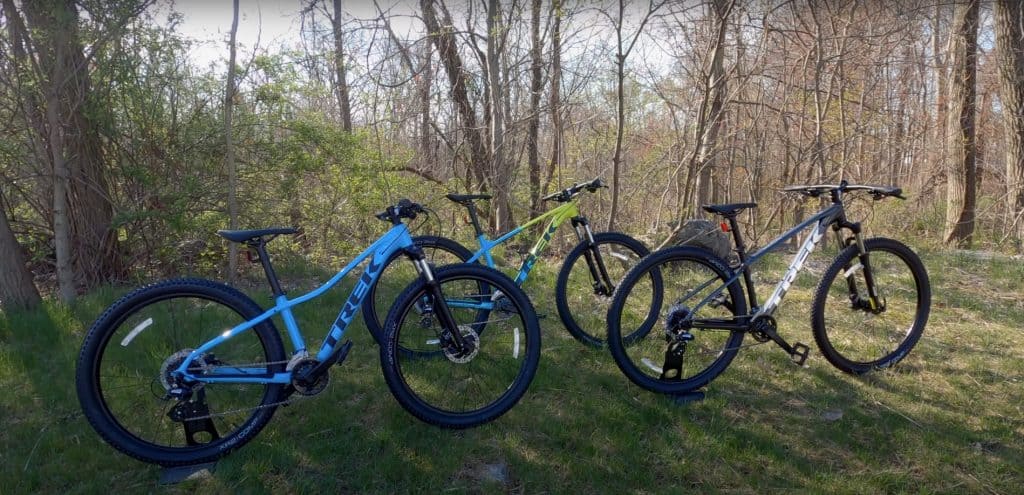
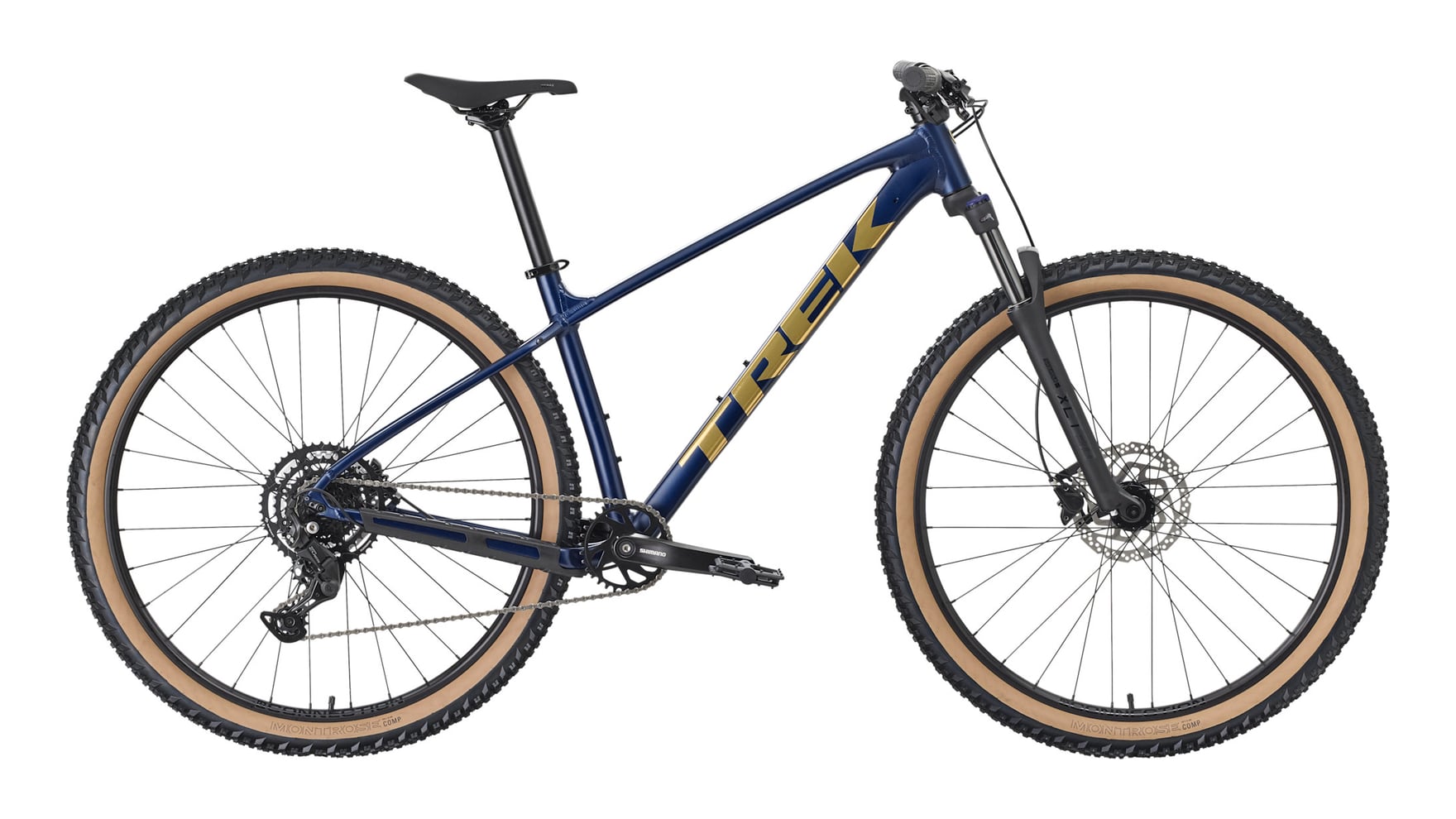
Why it’s here: the third-generation Marlin 5 has the parts that matter most on a budget hardtail and very little you’d need to replace soon. A Shimano CUES 1×9 drivetrain with an 11–46 cassette means one shifter and an easy climbing gear, Shimano MT200 hydraulic brakes need less hand force than cable discs, and 2.4″ Bontrager Montrose tires add grip and cushion. Trek also gave it a slacker 66.5° head angle, which makes it calmer on descents than the older cross-country Marlins.
It comes in seven sizes from XS to XXL, with 27.5″ wheels on the two smallest, so it fits riders from about 4′9″ to 6′8″. It’s also a practical bike away from the trail, with rack and kickstand mounts and a fork lockout for pavement. Our full Trek Marlin 5 review covers sizing, geometry and what changed from the 2022 model.
What we like
- 1×9 Shimano CUES drivetrain: one shifter, no front derailleur, and an 11–46 cassette
- Shimano hydraulic brakes: stronger, easier braking than the mechanical discs common at this price
- Seven sizes: XS to XXL, with 27.5″ wheels for shorter riders
- Room to upgrade: internal dropper post routing, and the frame accepts a 120 mm fork
Drawbacks
- Coil fork: preload and lockout, but no air spring to tune for your weight
- Heavier than before: 33.3 lb in size M, about 2.5 lb more than the 2022 model
2. Cannondale Trail 2
Best alternative to the Marlin 5
- Type
- Hardtail Mountain Bike
- Frame Material
- Aluminum
- Fork
- SR Suntour XCM Boost, 100 mm
- Drivetrain
- Shimano CUES 1×9
- Brakes
- Tektro M275 hydraulic
- MSRP
- $799
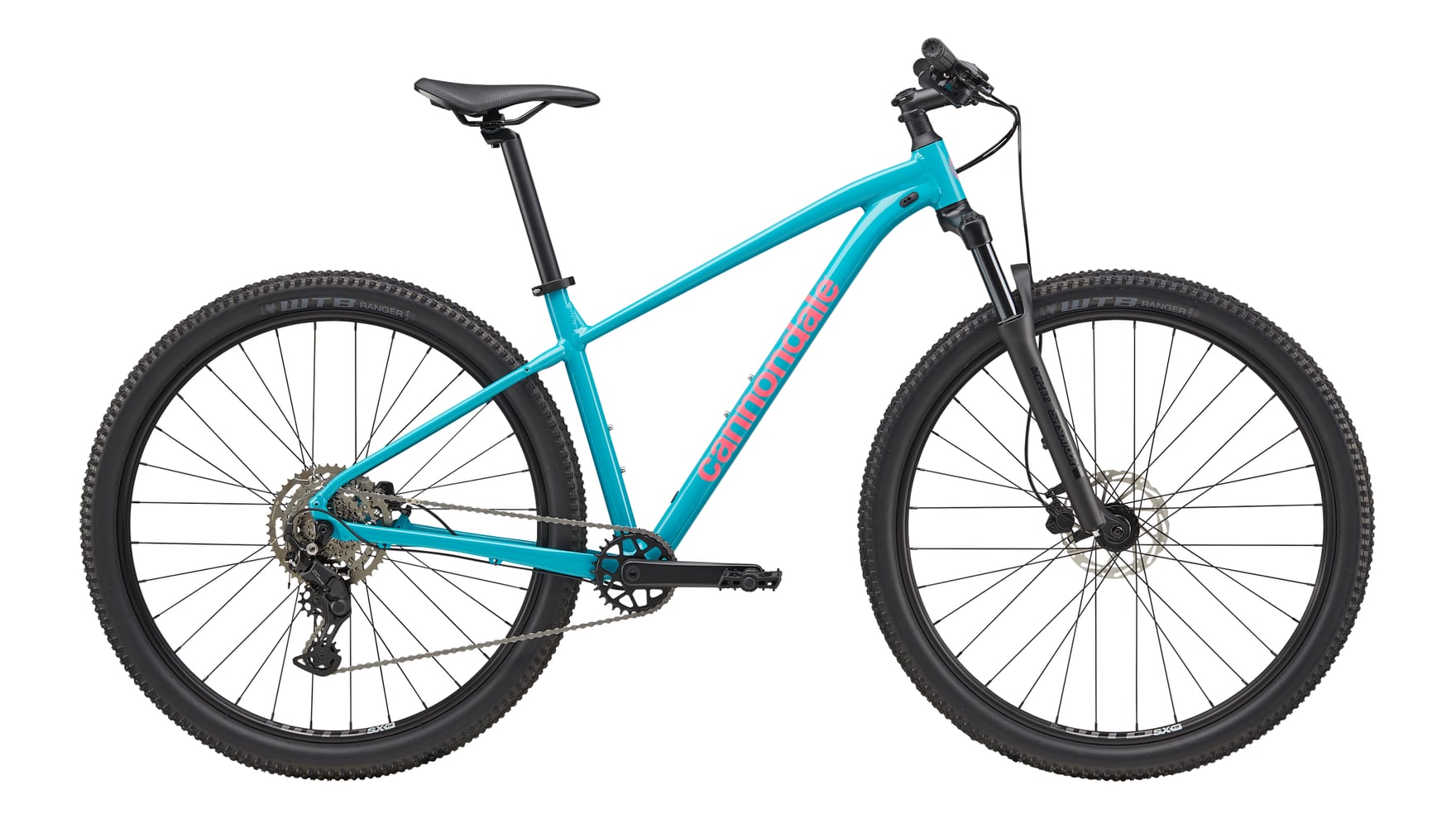
Why it’s here: at the same price, the Trail 2 matches the Marlin 5 almost part for part: a Shimano CUES 1×9 drivetrain with an 11–46 cassette, hydraulic disc brakes and a 100 mm coil fork. The differences are small. Cannondale fits 2.25″ WTB Ranger tires instead of 2.4″ tires and Tektro brakes instead of Shimano, while its SmartForm C3 aluminum frame has a 12 mm thru-axle at the back, internal routing, dropper post compatibility and a hidden kickstand mount.
If your local shop sells Cannondale rather than Trek, buy this and don’t look back. Sizes run XS to XL, with 27.5″ wheels on XS and S and 29″ wheels on the rest.
What we like
- Same core parts as the Marlin 5: CUES 1×9, hydraulic brakes, 100 mm fork
- 12 mm rear thru-axle: holds the wheel more securely than a quick release
- Dropper post ready: internal routing for an easy upgrade
Drawbacks
- Narrower tires: 2.25″ versus 2.4″ on the Marlin 5 and Talon 2
- No published weight: Cannondale doesn’t list it, so you can’t compare
3. Trek Marlin 4 (Gen 3)
Best under $600
- Type
- Hardtail Mountain Bike
- Frame Material
- Aluminum
- Fork
- SR Suntour coil, 100–110 mm
- Drivetrain
- Shimano CUES 1×8
- Weight
- 32.9 lbs. (M)
- Weight Capacity
- 300 lbs. total
- MSRP
- $599.99
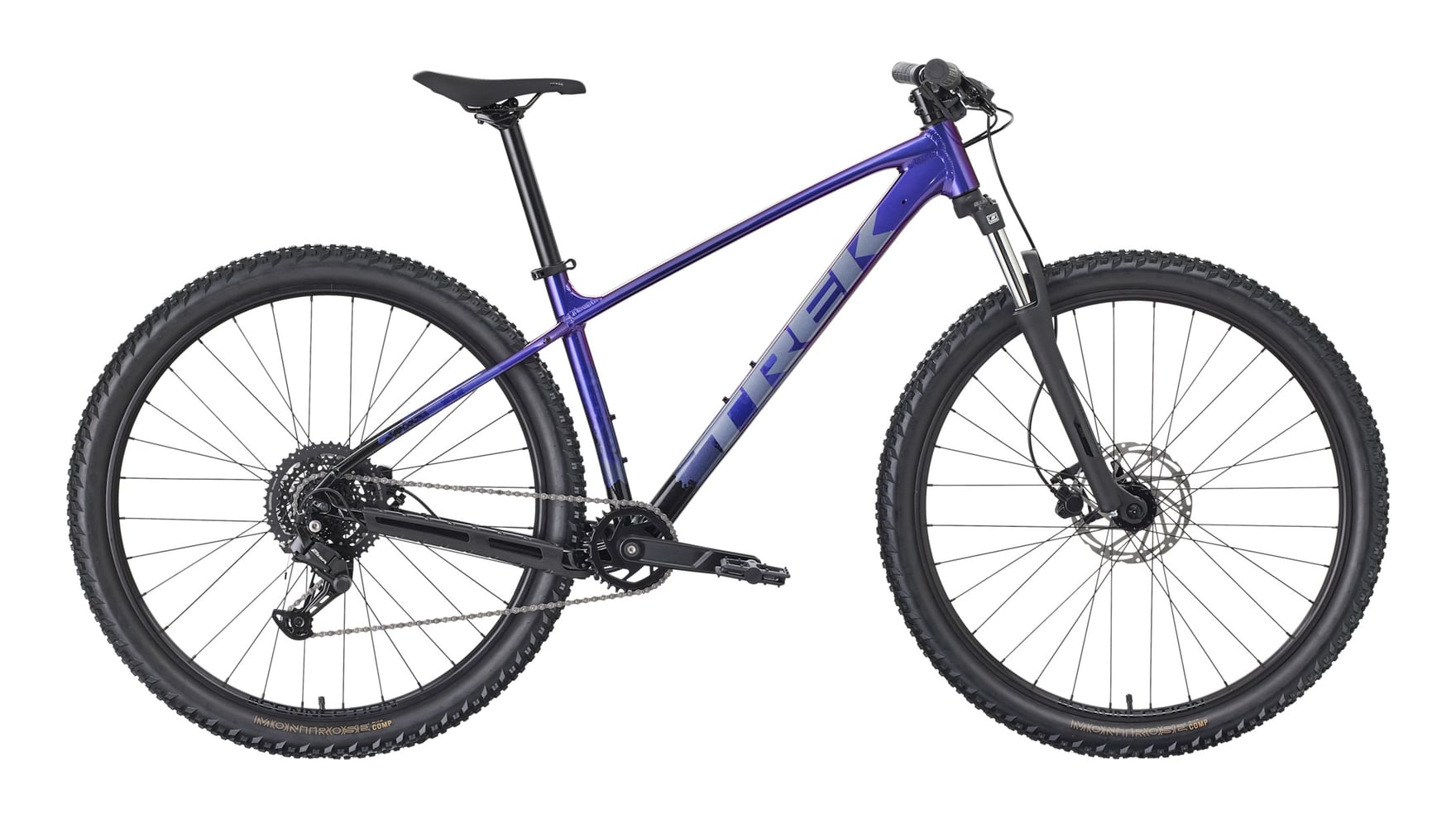
Why it’s here: the Marlin 4 uses the same Gen 3 frame as the Marlin 5, so it gets the newer trail geometry, internal dropper routing and rack and kickstand mounts for $200 less. It still has a single-chainring drivetrain (Shimano CUES with an 11–45 cassette, 8-speed) and hydraulic disc brakes, which is rare at $600.
What you give up is the Marlin 5’s 9-speed drivetrain and its fork with a hydraulic lockout. If $600 is a hard limit and you’ll mostly ride paths, gravel and easy singletrack, it’s the bike to buy. It’s also the only bike here with an XXS size, on 26″ wheels.
What we like
- Gen 3 frame: the same trail geometry and upgrade options as the Marlin 5
- Hydraulic brakes at $599.99
- Sizes from XXS: a good choice for smaller riders and teens
Drawbacks
- 8-speed gearing: bigger jumps between gears than the 9- and 10-speed bikes
- Basic fork: an entry-level coil fork that won’t suit heavier riders or rough trails
4. Cannondale Trail 3
Best under $700
- Type
- Hardtail Mountain Bike
- Frame Material
- Aluminum
- Fork
- SR Suntour XCM, 100 mm
- Drivetrain
- microSHIFT Acolyte 1×8
- Brakes
- Tektro M280 mechanical
- Riders Height
- 4′ 6″ to 6′ 3″
- MSRP
- $649
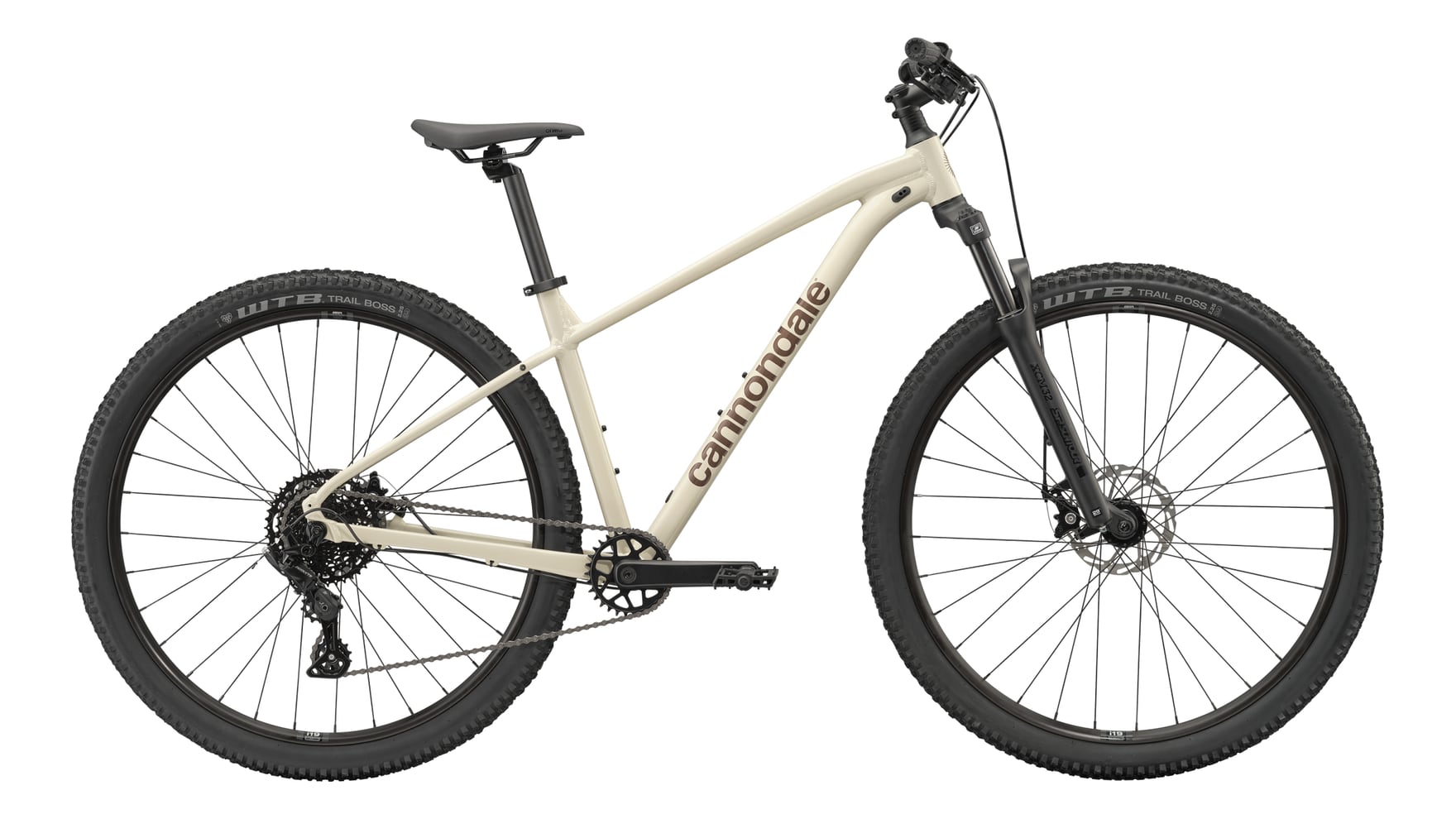
Why it’s here: the Trail 3 is new for 2026 and is the cheapest bike in Cannondale’s Trail range, $50 under the 2×7 Trail 8. It uses the same SmartForm C3 frame as the Trail 2, with the 12 mm rear thru-axle, dropper post routing and kickstand mount, plus a microSHIFT Acolyte 1×8 drivetrain with a 12–42 cassette and a 100 mm coil fork.
The compromise is the brakes: Tektro mechanical discs, which work but need more hand force and regular adjustment as the pads wear. Because the frame is the same as the Trail 2’s, it’s a bike you can upgrade over time. Cannondale’s size chart covers riders from 4′6″ to 6′3″.
What we like
- Same frame as the $799 Trail 2: thru-axle, dropper routing, kickstand mount
- Simple 1×8 shifting with a 12–42 cassette
- Five sizes with 27.5″ wheels on XS and S
Drawbacks
- Mechanical disc brakes: the Marlin 4 has hydraulic brakes for $49 less
- No published weight: Cannondale doesn’t list it
5. Specialized Rockhopper
Best two-chainring option
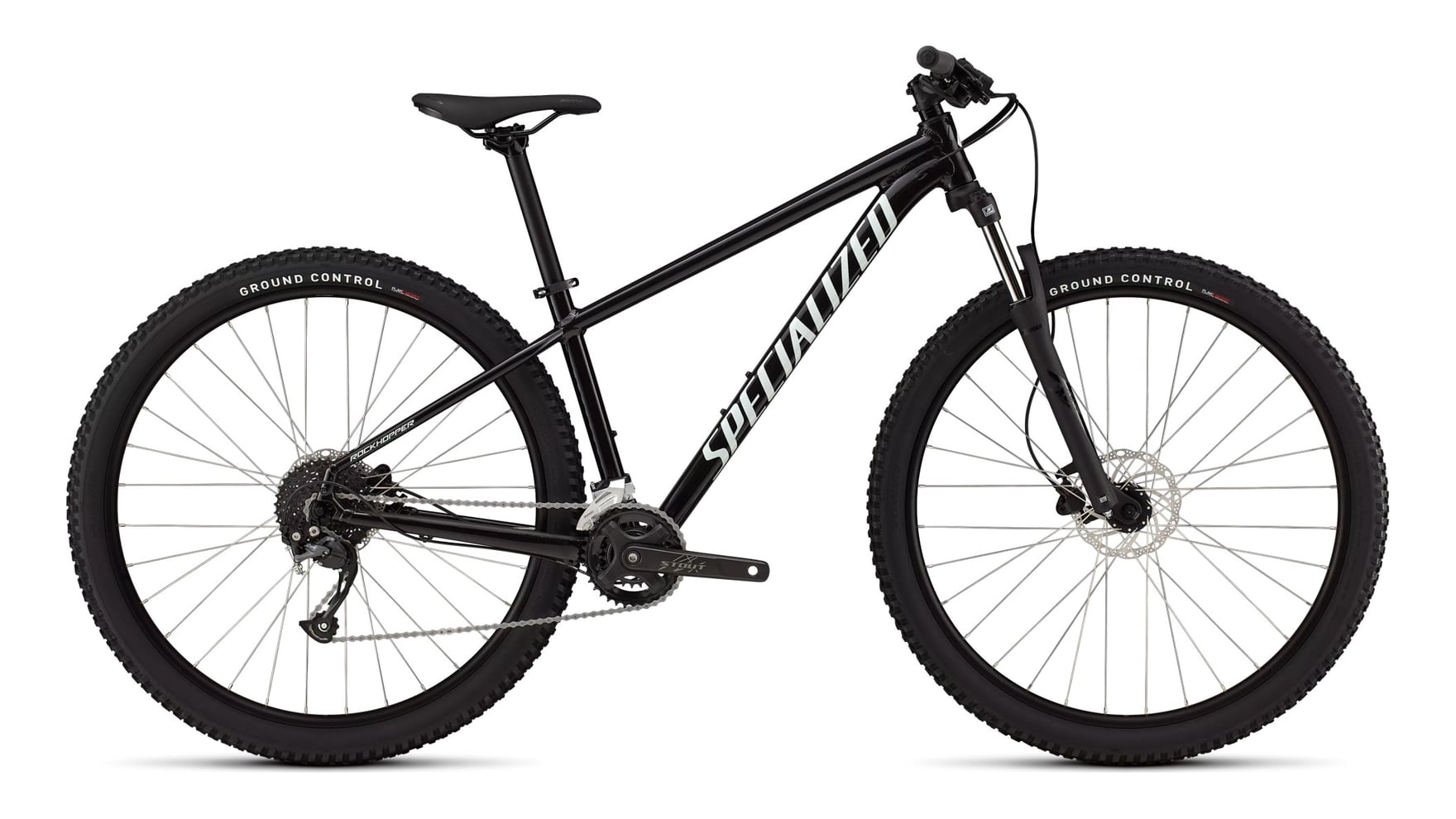
- Type
- Hardtail Mountain Bike
- Frame Material
- Aluminum
- Fork
- SR Suntour XCE, 80–100 mm
- Drivetrain
- Shimano Altus 2×9
- Brakes
- Tektro HD-M280 hydraulic
- Weight
- 31.1 lbs. (M)
- MSRP
- $749.99
Why it’s here: most budget mountain bikes have moved to a single chainring, but the base Rockhopper keeps two, with a Shimano Altus 2×9 drivetrain and an 11–36 cassette. That gives smaller steps between gears and a taller top gear, which suits riders who spend as much time on roads, gravel and bike paths as on singletrack.
It’s also one of the lighter bikes here at 31.1 lb in size M, with hydraulic brakes, 2.35″ Ground Control tires, and six sizes from XS to XXL. Specialized tunes the fork travel by size, from 80 mm on the smallest bikes to 100 mm on the largest.
What we like
- 2×9 gearing: a wider spread of gears for mixed road and trail riding
- 31.1 lb (M) with hydraulic brakes
- Six sizes, XS to XXL, with size-specific fork travel
Drawbacks
- Front derailleur: more to adjust and more to snag than a 1× drivetrain
- Entry-level fork: the SR Suntour XCE is the most basic fork in this guide
6. Giant Talon 2
Best tires for the money
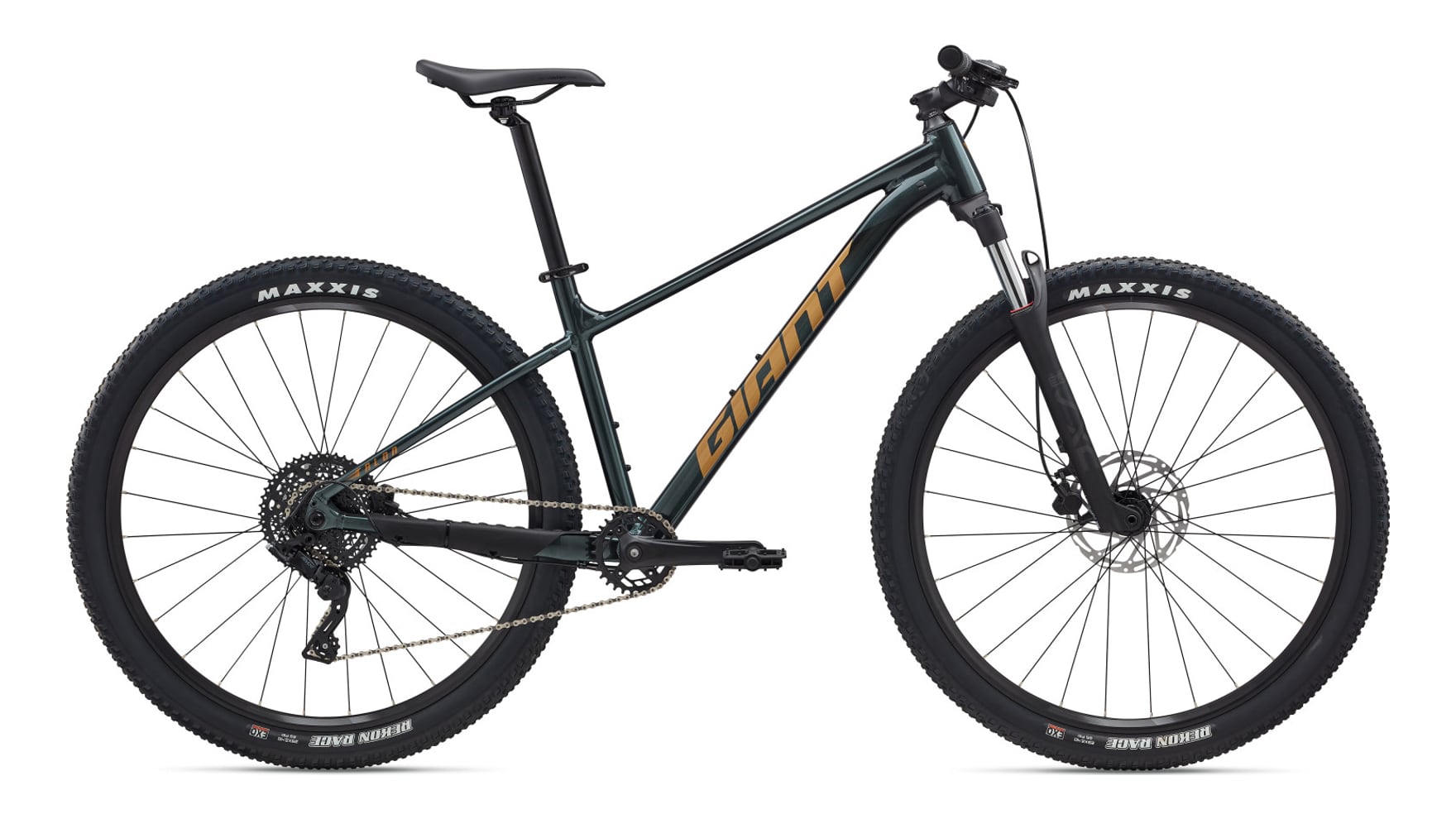
- Type
- Hardtail Mountain Bike
- Frame Material
- Aluminum
- Fork
- SR Suntour SXC32, 100 mm, thru-axle
- Drivetrain
- microSHIFT Advent 1×9
- Brakes
- Tektro M275 hydraulic
- Weight
- 31.1 lbs. (M)
- MSRP
- $800
Why it’s here: the Talon 2 comes with 2.4″ Maxxis Rekon tires, a brand riders often upgrade to, and a fork with a 15 mm thru-axle and 32 mm stanchions, which is stiffer than a quick-release fork when you steer hard or land a drop. Add a clutched microSHIFT Advent 1×9 drivetrain with an 11–46 cassette, Tektro hydraulic brakes with a 180 mm front rotor, and a 31.1 lb weight in size M.
Giant offers it in XS to XXL, with 27.5″ wheels on XS and S. The Talon 1 adds a Shimano CUES 1×10 drivetrain for $1,000.
What we like
- 2.4″ Maxxis Rekon tires out of the box
- Thru-axle fork with 32 mm stanchions
- Clutch derailleur: keeps the chain quieter and more secure on rough ground
Drawbacks
- microSHIFT instead of Shimano: works well, but shops stock fewer spare parts
- No dropper post at this price
7. Liv Tempt 2
Best for women
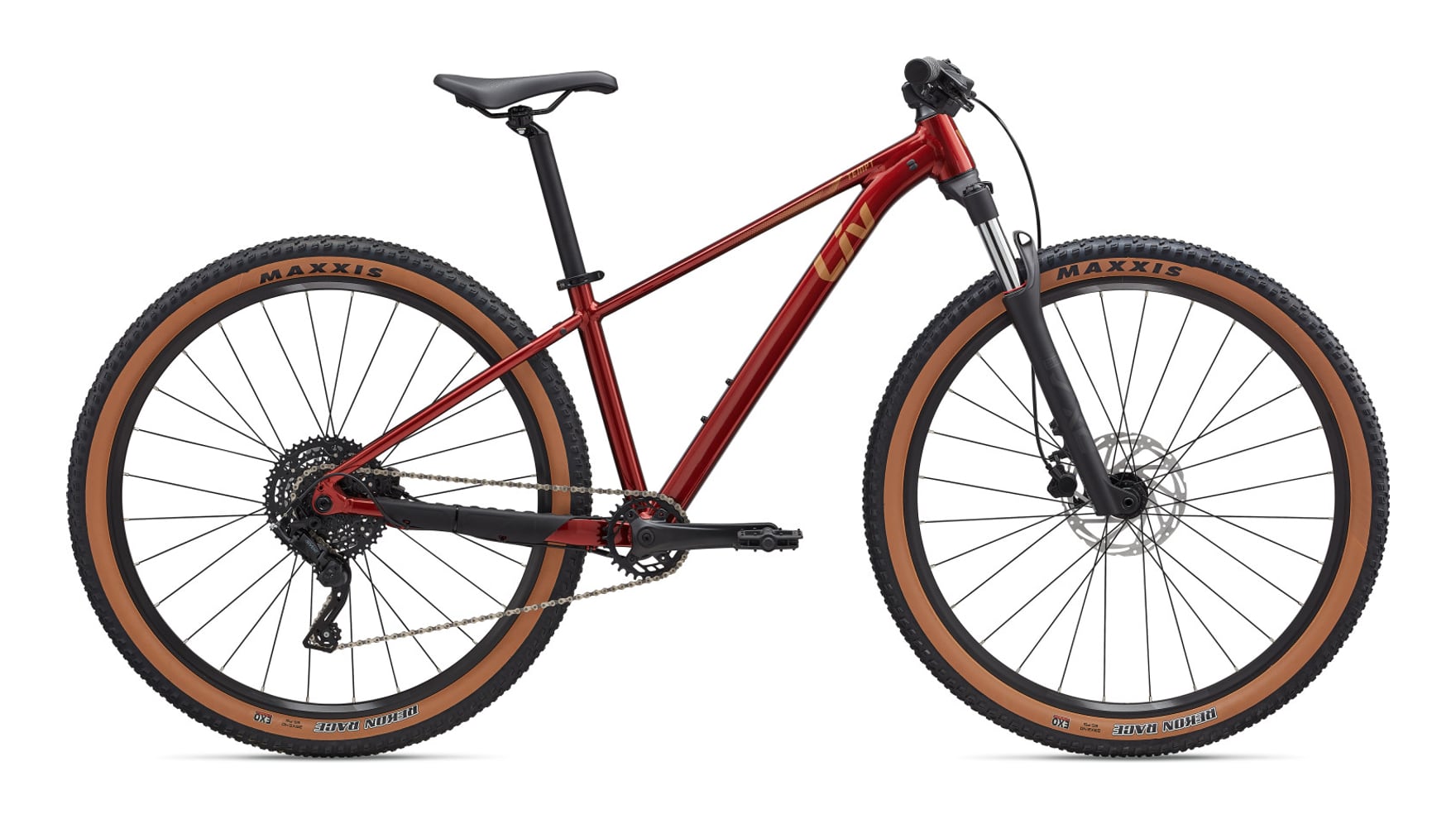
- Type
- Women’s Hardtail Mountain Bike
- Frame Material
- Aluminum
- Fork
- SR Suntour SXC32, thru-axle
- Drivetrain
- microSHIFT Advent 1×9
- Riders Height
- 4′ 11″ to 5′ 11″
- MSRP
- $800
Why it’s here: Liv is Giant’s women’s brand, and the Tempt 2 is its counterpart to the Talon 2, with the same microSHIFT Advent 1×9 drivetrain, thru-axle fork and 2.4″ Maxxis tires, on a frame sized for women. The sizes cover riders from 4′11″ to 5′11″, and the XS frame uses 27.5″ wheels. It was on sale for $700 when we checked, down from $800.
Any of the unisex bikes above will also work well for women; what matters most is the size. Riders under about 5′2″ should look at the XS sizes here, the Marlin 4 or the Cannondale Trail 3.
What we like
- Women’s sizing from 4′11″, with 27.5″ wheels on the XS
- Same parts as the Talon 2: thru-axle fork, 1×9, Tektro hydraulic brakes
- On sale for $700 when we checked
Drawbacks
- Tops out at 5′11″: taller riders should look at the unisex bikes
- No published weight
8. Trek Marlin 6 (Gen 3)
Best with a dropper post
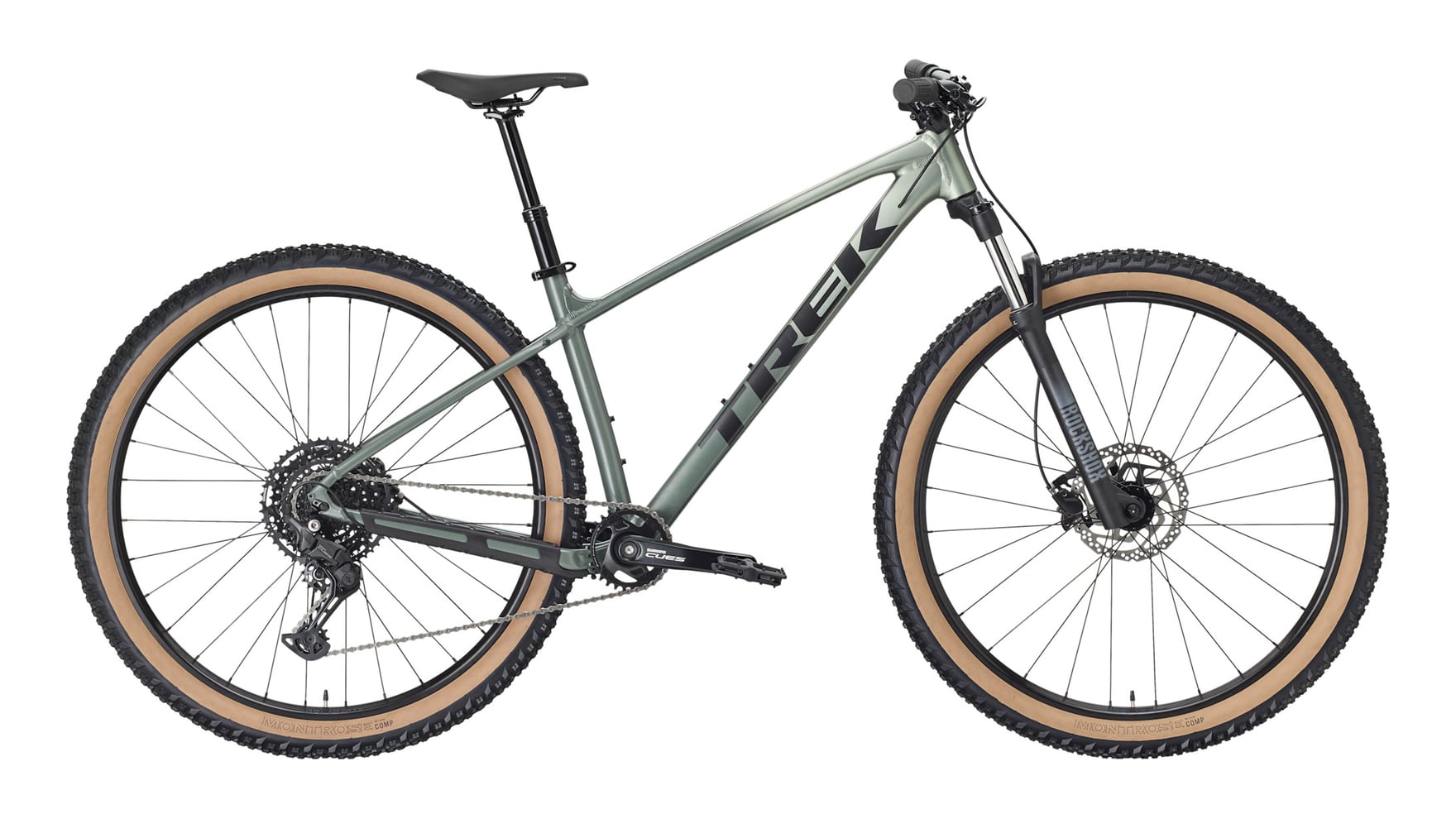
- Type
- Hardtail Mountain Bike
- Frame Material
- Aluminum
- Fork
- RockShox Judy, 100 mm
- Drivetrain
- Shimano CUES 1×10
- Weight
- 33.1 lbs. (M)
- Weight Capacity
- 300 lbs. total
- MSRP
- $999.99
Why it’s here: a dropper post lets you drop the saddle out of the way with a lever on the bar, and it’s the upgrade that makes steep descents feel least scary. The Marlin 6 comes with one (a TranzX post with 100 to 150 mm of drop, depending on size), plus a Shimano CUES 1×10 drivetrain with an 11–48 cassette, a RockShox Judy fork with Trek’s TurnKey lockout, and Shimano hydraulic brakes.
Buying a dropper separately and having it fitted typically costs much of the $200 difference from the Marlin 5, so if you’ll ride real trails, the Marlin 6 is the better value.
What we like
- Dropper post included, with travel matched to frame size
- 1×10 Shimano CUES with an 11–48 cassette
- RockShox Judy fork with lockout
Drawbacks
- Still a coil fork: the Rockhopper Comp has an air fork for the same price
- Five sizes, XS to XL: no XXL, unlike the Marlin 5
9. Specialized Rockhopper Comp
Best air fork under $1,000
- Type
- Hardtail Mountain Bike
- Frame Material
- Aluminum
- Fork
- RockShox Judy Solo Air, 80–100 mm
- Drivetrain
- SRAM S100 1×12
- Brakes
- Tektro HD-M280 hydraulic
- Weight
- 29.4 lbs. (M)
- MSRP
- $999.99
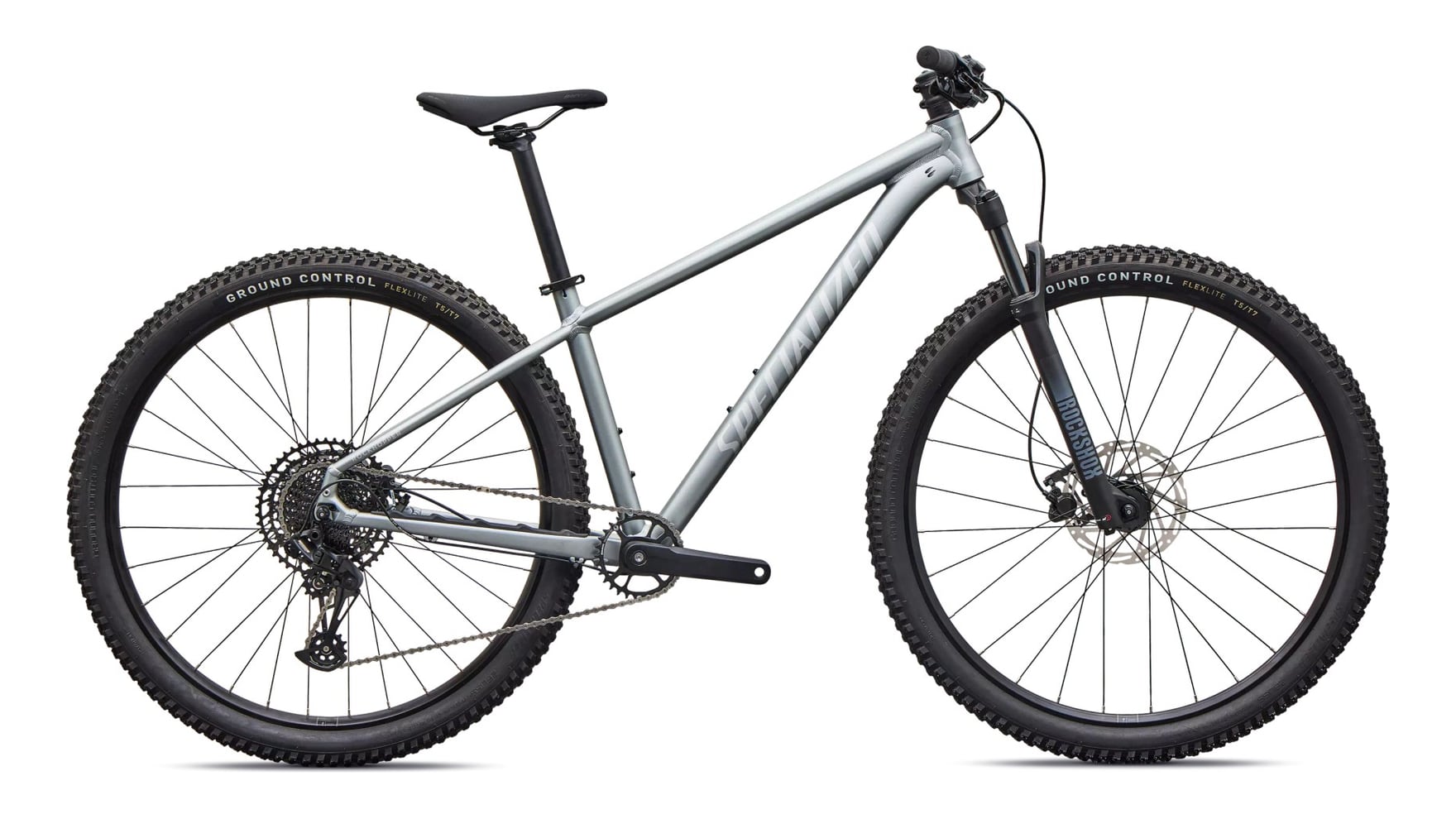
Why it’s here: it’s the only bike under $1,000 here with an air-sprung fork. An air fork is set with a shock pump to match your weight, so it works properly for light and heavy riders alike, where a coil fork is set up for an average rider. The Rockhopper Comp also has a 1×12 SRAM drivetrain with a wide 11–50 cassette, a 180 mm front rotor, and, at 29.4 lb in size M, it’s the lightest bike in this guide.
What we like
- RockShox Judy air fork you can tune to your weight
- 1×12 with an 11–50 cassette: the widest gear range here
- Lightest bike in this guide at 29.4 lb (M)
Drawbacks
- No dropper post, unlike the Marlin 6 at the same price
- Tektro brakes: fine, but the Marlin 6 has Shimano brakes for the same price
10. Giant Stance
Best full suspension on a budget
- Type
- Full-Suspension Mountain Bike
- Frame Material
- Aluminum
- Travel
- 130 mm rear, 140 mm fork
- Drivetrain
- Shimano CUES 1×10
- Riders Height
- 5′ 4″ to 6′ 6″
- MSRP
- $2,200
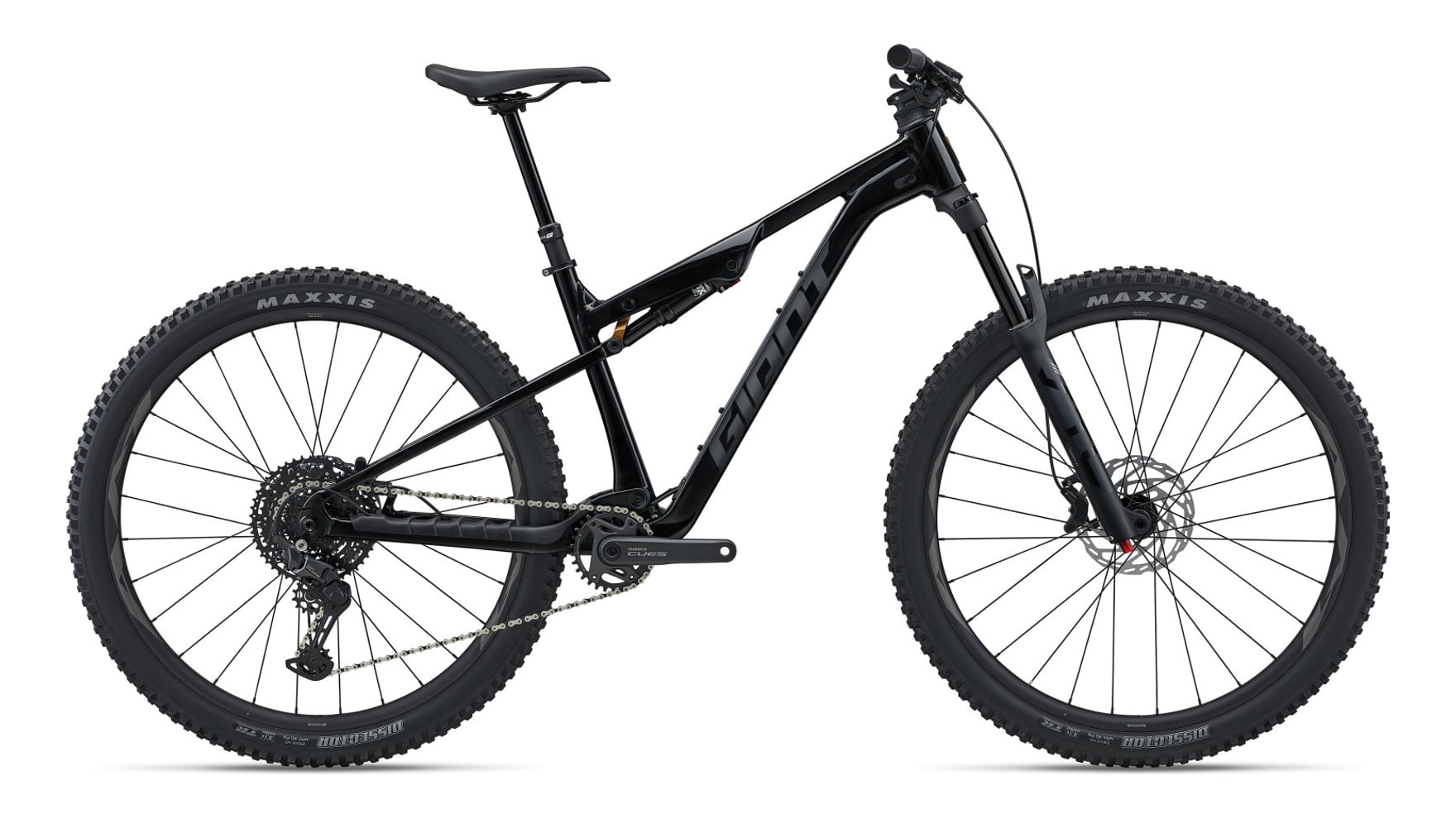
Why it’s here: a full-suspension bike costs much more than a hardtail to build well, and below about $2,000 the compromises usually aren’t worth it. The Stance is a full-suspension trail bike from a major brand that doesn’t skimp on the parts that matter: 130 mm of rear travel, a 140 mm air fork, a dropper post, 2.4″ Maxxis Dissector tubeless tires, a Shimano CUES 1×10 drivetrain with an 11–48 cassette and hydraulic brakes with 180 mm rotors front and rear.
If you ride rough, rooty or rocky trails often, it’s the step up from the hardtails above. If you’re new to mountain biking, a hardtail is still the better first bike for the money.
What we like
- 130/140 mm of travel with an air fork
- Dropper post and tubeless tires included
- Sizes for riders 5′4″ to 6′6″
Drawbacks
- More than twice the price of the best hardtails here
- No size below S, and no published weight
How we chose these bikes
We started from the hardtails that major brands sell through bike shops for under about $1,000, plus one full-suspension bike, and kept the ones that are current models with US prices on the maker’s website. Then we compared what matters most on a budget mountain bike:
- Brakes: hydraulic disc brakes scored highest; only one bike here (the Cannondale Trail 3) has mechanical discs.
- Drivetrain: one chainring with a wide-range cassette is simpler and more reliable on trails than a front derailleur.
- Fork: a lockout helps on pavement, a thru-axle adds stiffness, and an air spring can be tuned to your weight.
- Tires: 2.25″ is the minimum we’d want; 2.35–2.4″ adds grip and comfort.
- Sizing: how wide a range of riders each bike fits, and whether smaller sizes get 27.5″ wheels.
- Upgrade path: dropper post routing, thru-axles and fork compatibility, so the bike can grow with you.
We didn’t include department-store mountain bikes. They’re cheaper, but they usually come with heavy steel or basic aluminum frames, quick-release axles, cable brakes and forks that do little on a real trail, and they’re assembled without a bike shop’s check.
How to choose a budget mountain bike
How much to spend
About $600 gets you a real trail-capable hardtail with hydraulic brakes, like the Trek Marlin 4. Around $800 adds a better drivetrain and tires (Marlin 5, Trail 2, Talon 2), and $1,000 adds either a dropper post (Marlin 6) or an air fork (Rockhopper Comp). Below $600, expect mechanical brakes and fewer upgrade options.
Hardtail or full suspension
For most beginners and budget buyers, a hardtail is the better choice. It’s lighter, cheaper, needs less maintenance and teaches you to pick good lines. Full suspension is worth it once you ride rough trails regularly and can spend about $2,000 or more; here’s why full-suspension bikes cost more. Our best full-suspension mountain bikes under $2,000 guide goes deeper.
27.5″ or 29″ wheels
Most budget hardtails now use 29″ wheels on medium and larger frames because they roll over roots and rocks more easily, and 27.5″ wheels on small frames so shorter riders fit properly. You usually don’t need to choose: pick the right frame size and the wheel size comes with it.
Hydraulic or mechanical disc brakes
Hydraulic brakes need less hand force, are easier to control and adjust themselves as the pads wear. Mechanical (cable) disc brakes are cheaper and easy to fix, but need regular adjustment. On a mountain bike, hydraulic brakes are worth paying for. Read more in hydraulic vs. mechanical disc brakes.
Size and fit
The right size matters more than any component. Use each maker’s size chart, and if you’re between two sizes, size down for a more playful bike or up for more stability and comfort on long rides. Our bike size charts can help.
Weight limits
Trek publishes a 300 lb maximum total weight for the Marlin, which includes the bike, rider and gear. We didn’t find a published limit for the other bikes on their spec pages. If you weigh more than about 250 lb, see our best bikes for heavy riders, where every pick has a published limit.
Where to buy
All of these bikes are sold through bike shops, and most can also be ordered online for in-store pickup. Buying through a shop means the bike is assembled and adjusted properly, and most shops include a free tune-up after the cables and spokes settle in.
Frequently asked questions
What is the best budget mountain bike in 2026?
For most riders, the Trek Marlin 5 (Gen 3) at $799.99. It has a 1×9 Shimano CUES drivetrain, Shimano hydraulic brakes, 2.4″ tires and trail geometry, comes in seven sizes and is sold and serviced through Trek dealers. The Cannondale Trail 2 is an equally good choice at $799.
How much should I spend on my first mountain bike?
Plan on about $600 to $1,000 for a new hardtail you’ll ride on real trails. That range gets you hydraulic brakes, a suspension fork and parts you can upgrade later. Spend less and you’ll usually get cable brakes and a fork that does little on rough ground.
Are mountain bikes under $500 worth it?
For paths, gravel and easy dirt roads, they can be. For singletrack, a sub-$500 bike usually has cable brakes, a basic fork and quick-release axles that limit what it can handle. A used bike from a major brand is often a better buy than a new bike under $500.
Is a hardtail good for beginners?
Yes. A hardtail is the best first mountain bike for most people. It’s lighter, cheaper and simpler to maintain than a full-suspension bike, and it handles most trails beginners ride.
Trek Marlin 5 or Cannondale Trail 2?
Both cost about $800 and share a Shimano CUES 1×9 drivetrain, hydraulic brakes and a 100 mm coil fork. The Marlin 5 has wider 2.4″ tires, Shimano brakes, an XXL size and a published 300 lb weight limit; the Trail 2 has a 12 mm rear thru-axle and a hidden kickstand mount. If you want more detail on the Trek, read our Marlin 5 review. Choose whichever brand your local shop sells.
Do I need a dropper post?
You don’t need one to start, but it’s the upgrade that makes the biggest difference on steep descents. The Marlin, Cannondale Trail and Rockhopper frames are all dropper-ready, and the Marlin 6 and Giant Stance come with one. If you’re weighing a cheaper Giant, our Giant Talon 3 review covers the entry-level Talon.
Sources
- Trek specs and weight limits for the Marlin 4, Marlin 5 and Marlin 6 (Gen 3)
- Cannondale Trail 2 and Trail 3 specs and size chart
- Specialized Rockhopper and Rockhopper Comp technical specifications
- Giant Talon 2 and Stance (2026) specifications and sizing; Liv Tempt 2
- Diamondback’s US site, for the models no longer listed
Prices and specs checked on November 17, 2026, on each manufacturer’s US website. Prices change often, especially around sales; check before you buy.
Alek Asaduryan
Alek is the founder of YesCycling and has been riding bikes and in the cycling industry since 1991. Since then, his mission is to make cycling more accessible to everyone.