
A €2,000 Bike in 2026 Does Things a €5,000 Bike in 2020 Couldn’t
Twelve-speed shifting, hydraulic discs, tubeless wheels and 32 mm tyre clearance are now the floor rather than the ceiling. But the story isn’t as clean as the spec sheets suggest.
Six years is a long time in bike specification. Long enough that a component list which would have cost you five thousand euros in 2020 is now roughly what you get for two, and long enough that a few things which felt like the future then have turned out to be dead ends.
Here’s the honest version of the comparison — what actually improved, what didn’t, and the asterisk nobody puts in these articles.
What €5,000 bought in 2020
A carbon frame. Shimano Ultegra Di2 or mechanical Dura-Ace — eleven speeds, because twelve-speed Dura-Ace and Ultegra didn’t arrive until September 2021 and 105 Di2 wasn’t announced until 2022. Electronic shifting at all was a four-thousand-euro-plus proposition.
Disc brakes were winning but hadn’t won; plenty of €5,000 bikes in 2020 still shipped with rim brakes, and a fair number of buyers preferred it that way. Tyres were typically 25 or 28 mm, with frames that often wouldn’t clear much more. Tubeless was an option people argued about rather than a default. Wheels at that price were usually decent alloy or entry carbon.
It was a very good bike. It was also, by the standards of a 2026 spec sheet, oddly limited.
What €2,000 buys in 2026
The under-£2,000 / $2,000 segment has become the most competitive part of the market, and the baseline specification has hardened into something specific.
A hydroformed aluminium or entry-level carbon frame. A 12-speed drivetrain — the transition to 12-speed Shimano 105 mechanical and SRAM Apex is complete at this tier. Hydraulic disc brakes, which are now genuinely non-negotiable; a bike at this price with mechanical discs or rim brakes in 2026 should be priced as the compromise it is. Tubeless-ready alloy wheels, typically around 1,600 to 1,800 grams for the pair. Semi-integrated cable routing, which used to be a flagship-only aesthetic. And clearance for 32 mm tyres or more.
Merida’s Reacto 4000 is a fair illustration of how far down the range the trickle reaches: the cheapest aero bike in its family, with 12-speed 105, hidden cabling from the cockpit, room for 30 mm tyres, a rear light built into the seatpost and a multi-tool hidden under the saddle. The frame is around 200 grams heavier than the pro-level models in the same range and uses lower-spec carbon, but Merida claims identical ride characteristics and aerodynamics.
The electronic shifting line has moved a long way down
This is the single biggest shift, and it happened faster than most people expected.
Three years ago, electronic shifting on a carbon road bike meant a five-thousand-dollar price tag. In 2026, a full-carbon frame with 12-speed semi-wireless 105 Di2 and disc brakes is available under €3,000 — with the cheapest examples reported around €2,400 for a Rose Reveal 04 105 Di2, roughly £2,500 for a Cube Attain C:62 SLX, and £2,599 for a Canyon Endurace CF 7 Di2.
The economics behind that are simple. A full 105 Di2 groupset retails somewhere between roughly $1,100 and $1,900 depending on market and discount, with groupset-only deals reported as low as £849. Ultegra Di2 runs around $2,500. Once the electronic group costs less than half of the tier above it, the only question is whether a carbon frame, disc brakes and usable wheels can be added underneath while keeping the total under three thousand.
The other half of the answer is direct-to-consumer. Canyon, Rose and Van Rysel sell without a dealer in the middle, and stripping out that markup is what makes this tier exist at all. It’s not that bikes got cheaper to make — it’s that a distribution layer got removed.
Where the 2020 bike still wins
An honest comparison has to include this, because spec-sheet triumphalism is how people end up disappointed.
Wheels. This is where budget bikes still cut. A €2,000 bike in 2026 typically ships with shallow, heavy, low-spec alloy wheels and cheap tyres. Reviewers routinely note that these bikes only reveal their potential after a wheel and tyre upgrade, which is a real cost that doesn’t appear on the price tag. The €5,000 bike from 2020 had better rolling stock than almost anything at €2,000 today.
Frame quality. Lower-tier carbon uses more layers of less stiff material to reach the same strength, which means more weight. A 200-gram frame penalty is fine. It’s still a penalty.
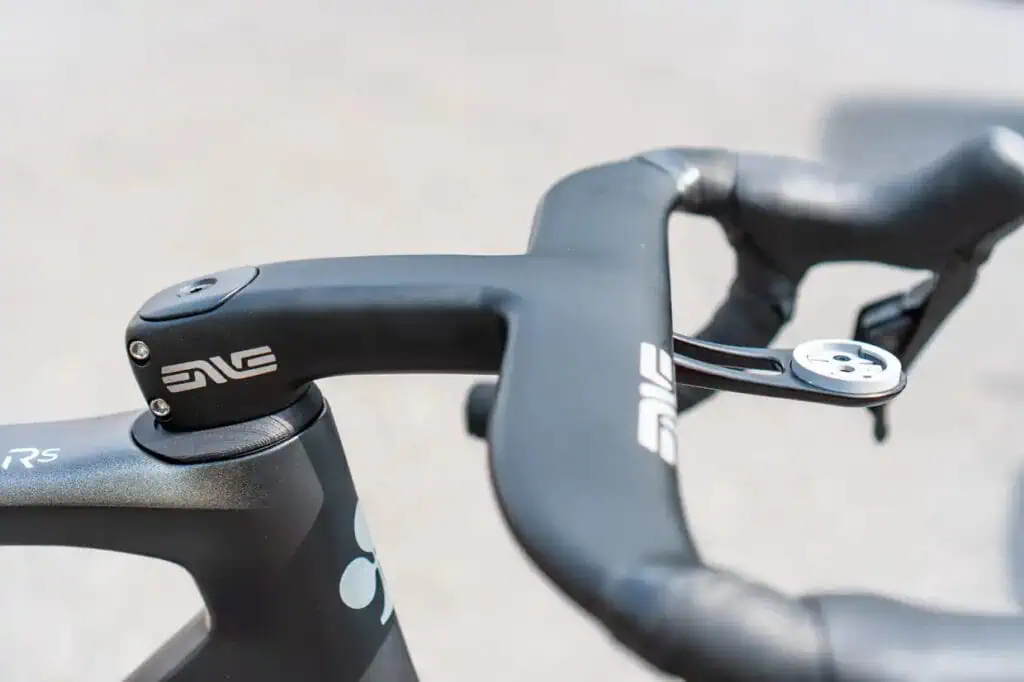
Serviceability. Fully integrated cockpits and hidden cabling look superb and are miserable to work on. Replacing a cable, changing stem length or packing the bike for travel is meaningfully harder on a 2026 bike than a 2020 one with external routing. And when a proprietary integrated bar-stem from a discontinued platform breaks, the replacement may simply not exist.
Optionality. A 2020 rim-brake bike is lighter, cheaper to maintain, and easier to fix at the roadside. Almost nobody is choosing that now, and for wet-weather braking the disc bike is straightforwardly better — but “the old thing was worse in every respect” isn’t true.
The asterisk: that’s not really €2,000
Nobody writing these comparisons adjusts for inflation, and it matters.
Euro-area prices have risen substantially since 2020 — enough that €2,000 today buys meaningfully less than €2,000 did then. Adjust for it and the comparison shifts from “a quarter of the price” to something closer to half, which is still a remarkable improvement but a less dramatic headline.
Worth checking the exact figure against Eurostat’s HICP series for your market before quoting a number, because the cumulative total varies a lot by country.
And the ceiling ran away
While the floor was rising, the top of the market went somewhere strange. Flagship road bikes now routinely cost between twelve and sixteen thousand — Trek’s current Madone sits around $16,000, and Specialized’s Tarmac SL9 and Canyon’s Ultimate CFR have been compared with a roughly $6,000 gap between them for broadly similar performance.
So both things are true. The cheap bike got dramatically better. The expensive bike got dramatically more expensive. The gap in actual riding experience between a €2,000 bike and a €12,000 bike in 2026 is narrower than the gap between a €2,000 and a €5,000 bike was in 2020 — while the price gap is far wider.
If you’re buying
Spend at the frame and the groupset tier, then upgrade wheels and tyres later. That order is almost always correct at this price point, because wheels and tyres are the cheapest meaningful performance you can buy and the frame is the thing you can’t change.
Don’t pay a premium for electronic shifting if the alternative is a better frame with mechanical 105. Twelve-speed mechanical 105 is excellent, and the bike underneath matters more than the shifting method.
Check tyre clearance before anything else. It’s the specification that most affects how a bike actually feels on real roads, and it’s the one that can’t be upgraded.


