GT Aggressor Sport 2021 Review
GT Aggressor Sport review: 10 reasons to buy it or not, GT's full specs and geometry, 27.5 vs 29 and sizing, used-buying checks, and what to buy new instead.
Updated · 11 min read
In this article
- 10 reasons to buy (or not buy) the GT Aggressor Sport
- Full GT Aggressor Sport specs
- GT Aggressor Sport geometry
- What size GT Aggressor Sport do you need?
- Buying a used GT Aggressor Sport: what to check
- Upgrades worth making
- Alternatives to the GT Aggressor Sport
- The verdict: should you buy the GT Aggressor Sport?
- Frequently asked questions
The GT Aggressor Sport is GT’s entry-level recreational hardtail: an aluminum frame, a front suspension fork, 21 gears and disc brakes, at a price well below a bike-shop trail hardtail. When we first reviewed it, it was $625 at REI.
Most people looking it up today are deciding whether to buy one used or from leftover stock. GT’s US website no longer lists the Aggressor at all, so this review covers the 2021 bike with GT’s own specs and geometry, the ten things that matter most before you buy one, which size and wheel size to choose, what to check on a used bike, and what to buy new instead.
GT Aggressor Sport (2021)

- Type
- Hardtail Mountain Bike
- Frame Material
- Aluminum
- Fork
- SR Suntour M3030, 75 mm
- Drivetrain
- microSHIFT 3×7 (21-speed)
- Brakes
- Mechanical disc, 160 mm rotors
- Wheel Size
- 27.5″ (XS–L) or 29″ (S–XL)
Our verdict: A sensible bike for bike paths, gravel, fire roads and easy dirt trails, if the price is right. The frame is well made, it comes in two wheel sizes so shorter riders get a bike that fits, and disc brakes plus a very low climbing gear make hills manageable. It’s not a trail bike: the 75 mm fork, quick-release wheels, 3×7 gearing and steep head angle are built for comfort and low cost, not for rough singletrack. Buy one used only if it’s clearly cheaper than a new Trek Marlin, because a second-hand Aggressor has no frame warranty.
What we like
- Two wheel sizes: 27.5″ wheels on XS–L and 29″ wheels on S–XL, so riders of most heights get a well-proportioned bike
- Disc brakes: mechanical discs with 160 mm rotors front and rear stop reliably in the wet, unlike the rim brakes on cheaper bikes
- Very low climbing gear: a 24-tooth small chainring with a 34-tooth cog is as easy as the lowest gear on a new Marlin 5
- Brand-name tires and rims: WTB Ranger Comp 2.25″ tires on WTB SX19 rims
- Comfortable, upright cockpit: a 720 mm riser bar and short reach suit casual riding
Drawbacks
- Basic 75 mm coil fork: less travel than the 100 mm forks on current trail hardtails
- 3×7 drivetrain: a front derailleur and three chainrings mean more to adjust and more overlapping gears than a modern 1× setup
- Quick-release axles front and rear: fine for paths, but less stiff and secure than thru-axles
- No longer listed by GT: new stock is hard to find, and GT’s frame warranty only covers the original, registered owner
10 reasons to buy (or not buy) the GT Aggressor Sport
Five reasons the Aggressor Sport is worth a look, and five reasons to pass. Each one is based on GT’s published spec and geometry, not on marketing copy.
Reasons to buy it
1. There’s a size and wheel for almost everyone. GT made the Aggressor Sport in eight frame and wheel combinations: XS, S, M and L with 27.5″ wheels, and S, M, L and XL with 29″ wheels. The smallest 27.5″ frame has a 38 cm (15″) seat tube and just 70.7 cm (27.8″) of standover, which is rare on a cheap adult mountain bike.
2. Disc brakes front and rear. Mechanical disc brakes with 160 mm rotors work in rain and mud and are easy to adjust with basic tools. Cheaper department-store mountain bikes often still use rim brakes.
3. An easy gear for every hill. The Prowheel crank has 42, 34 and 24-tooth chainrings and the Sunrace cassette runs 14–34. The lowest gear (24×34) is about as easy as the 32×46 bottom gear on Trek’s current Marlin 5, and the top gear (42×14) is slightly taller, so you can keep pedaling on fast, flat roads.
4. Good tires for mixed riding. The WTB Ranger Comp is an all-round trail tire, and at 2.25″ wide it adds cushion the short fork can’t. On a bike that will see pavement, gravel and dirt in the same ride, it’s a sensible choice.
5. A frame that isn’t the weak point. GT’s 6061-T6 aluminum frame uses its Triple Triangle design with floating seat stays, forged dropouts and GT’s X Guides to keep the cables tidy. GT’s current warranty gives the original owner a lifetime frame warranty, as long as the bike was bought from an authorized GT retailer and registered.
Reasons not to buy it
6. The fork is the bare minimum. The SR Suntour M3030 is a coil fork with 75 mm of travel. That takes the sting out of potholes and roots, but trail hardtails like the Trek Marlin use 100 mm forks. Push the Aggressor hard on rocky trails and the fork will be the first thing you notice.
7. The geometry is built for comfort, not descending. The head angle is 68.5° on the 29″ bikes and 68° on the 27.5″ bikes. The current Trek Marlin Gen 3 is 66.5°. A steeper head angle makes the Aggressor quick and light to steer at low speed, but less stable on steep, loose descents.
8. Three chainrings is old technology. A 3×7 drivetrain gives 21 gears on paper, but many overlap, and the front derailleur needs more adjusting than a 1× system. Many newer mountain bikes in this price range, like Trek’s Marlin 5, use a single chainring with a wide-range cassette instead.
9. Quick-release axles and other entry-level parts. Both wheels use quick-release hubs, the bottom bracket is a square-taper cartridge, and the cassette is 7-speed. All of it is cheap to replace, but it also limits upgrades: a better fork or wheelset costs a large share of what the whole bike is worth.
10. It’s discontinued, and a used one has no warranty. GT’s US website no longer lists the Aggressor. Because GT’s frame warranty only covers the original owner, a second-hand Aggressor comes with none. That’s why a used one has to be clearly cheaper than a new Trek Marlin 4 ($599.99 on Trek’s US site).
Full GT Aggressor Sport specs
This is GT’s own spec for the 2021 Aggressor Sport (model code G28301M). GT’s Australian product page still showed the same spec in early 2023.
| Part | GT Aggressor Sport (2021) |
|---|---|
| Frame | GT 6061-T6 aluminum, Triple Triangle with floating seat stays, forged dropouts with disc brake mounts, zero-stack 1 1/8″ head tube |
| Fork | SR Suntour M3030, 75 mm travel, coil spring |
| Sizes | XS, S, M, L (27.5″); S, M, L, XL (29″) |
| Shifters | microSHIFT TS38, 3×7 |
| Front derailleur | microSHIFT FD-M20M |
| Rear derailleur | microSHIFT RD-M26C |
| Crankset | Prowheel alloy, 42/34/24T |
| Bottom bracket | Cartridge, square taper |
| Cassette | Sunrace, 14–34T, 7-speed |
| Chain | KMC Z7, 7-speed |
| Brakes | Mechanical disc, 160 mm rotors front and rear |
| Rims | WTB SX19, 32 hole |
| Hubs | Alloy disc, quick release (sealed rear hub) |
| Spokes | Stainless steel, 14g |
| Tires | WTB Ranger Comp, 27.5″ or 29″ × 2.25″, DNA compound |
| Handlebar | GT All Terra alloy riser, 25 mm rise, 8° sweep, 720 mm wide |
| Stem | GT All Terra, 6061 alloy, 31.8 mm clamp, 8° |
| Headset | Semi-integrated, sealed cartridge |
| Seatpost | GT All Terra two-bolt alloy |
| Saddle | GT MTB |
| Grips | GT Statement |
| Pedals | GT Slim Line flat pedals |
| Weight | Not published by GT |
GT Aggressor Sport geometry
Measurements are in centimeters, from GT’s geometry chart. The 29″ and 27.5″ versions are different frames, so compare the right table.
29″ wheels
| S | M | L | XL | |
|---|---|---|---|---|
| Seat tube | 42 | 46 | 50 | 54 |
| Top tube (actual) | 56.2 | 58 | 60.1 | 62.4 |
| Reach | 39.9 | 42 | 44 | 45.9 |
| Stack | 61 | 61.9 | 62.8 | 63.8 |
| Standover | 74.2 | 76.7 | 79.2 | 81.7 |
| Head tube angle | 68.5° | 68.5° | 68.5° | 68.5° |
| Seat tube angle | 73.5° | 73.5° | 73.5° | 73.5° |
| Chainstay | 44.5 | 44.5 | 44.5 | 44.5 |
| Wheelbase | 111.7 | 114.1 | 116.5 | 118.8 |
| BB height | 31.2 | 31.2 | 31.2 | 31.2 |
27.5″ wheels
| XS | S | M | L | |
|---|---|---|---|---|
| Seat tube | 38 | 42 | 46 | 50 |
| Top tube (actual) | 53.2 | 54.9 | 56.9 | 59.2 |
| Reach | 37.9 | 40 | 42 | 43.9 |
| Stack | 56.6 | 57.5 | 58.4 | 59.4 |
| Standover | 70.7 | 73.2 | 75.7 | 78.2 |
| Head tube angle | 68° | 68° | 68° | 68° |
| Seat tube angle | 73.5° | 73.5° | 73.5° | 73.5° |
| Chainstay | 44 | 44 | 44 | 44 |
| Wheelbase | 107.5 | 109.9 | 112.3 | 114.6 |
| BB height | 31.5 | 31.5 | 31.5 | 31.5 |
What size GT Aggressor Sport do you need?
GT’s product pages give geometry but no height chart for the Aggressor, so here’s how to size one from the numbers above.
- Check standover first. Measure your inseam in socks, from the floor to your crotch. Pick a size whose standover is a few centimeters below that, so you can stand over the top tube with both feet flat.
- Then compare reach. Reach decides how stretched out you’ll feel. The Aggressor is short for its size: the 29″ L has the same 44 cm reach as a current Trek Marlin M, which Trek recommends for riders about 5′5″ to 5′10″. In practice, an Aggressor feels roughly one size shorter than a modern trail hardtail with the same letter.
- Between sizes? Size up if you’re tall for the size or want more stability. Size down if you want a more upright, easy-to-handle bike, or if standover is tight.
For a general height-to-frame guide, see our bike size charts, or let Bike Match check your height against bikes with published size ranges.
27.5″ or 29″ wheels?
On the S, M and L sizes you get a choice. The 27.5″ version has a front end about 3–4 cm lower (stack), slightly less standover and a shorter wheelbase, so it feels smaller, lighter-steering and easier to manage. The 29″ version rolls over bumps more easily and holds speed better on long gravel rides. Shorter riders and nervous beginners should lean 27.5″. Taller riders and anyone covering longer distances should lean 29″.
Buying a used GT Aggressor Sport: what to check
Check these before you pay for a used one:
- Fork: push down hard on the bars. The fork should compress smoothly and return without clunking. Look for scratches or rust on the stanchions (the shiny upper tubes).
- Brakes: squeeze each lever. They should bite well before the lever touches the bar. Warped 160 mm rotors rub as the wheel turns; pads and rotors are cheap to replace, but budget for them.
- Drivetrain: shift through all 21 gears on a test ride. Worn chains skip under load; a chain-checker tool shows wear in seconds. A 7-speed chain and cassette are inexpensive, but they’re worth replacing together.
- Wheels: spin each wheel and watch the rim pass the brake. A wobble means it needs truing. Check for loose spokes and play in the hubs.
- Frame: look closely at the welds around the bottom bracket, head tube and dropouts for cracks. Walk away from any crack, however small.
- Size: check the frame size and wheel size match what you need, using the tables above. A bargain in the wrong size is not a bargain.
What to pay: the Aggressor sold new for around $625 at REI when we reviewed it, and a brand-new Trek Marlin 4 is $599.99 with a full warranty. A used Aggressor in good condition should cost well under that, after you allow for a service, new brake pads or a new chain.
Upgrades worth making
- Brake pads and rotors: good pads make a noticeable difference to mechanical disc brakes for little money.
- Contact points: a saddle, grips and pedals that suit you make every ride more comfortable.
- Tires: if you ride mostly pavement, a smoother, narrower tire will make the bike much faster. If you ride mostly dirt, a grippier tire helps more than any other upgrade.
- Skip the fork and drivetrain: a better fork (it needs a straight 1 1/8″ steerer and a quick-release 100 mm axle) or a 1× drivetrain conversion costs a large share of the bike’s value. If you want those, buy a better bike instead.
Alternatives to the GT Aggressor Sport
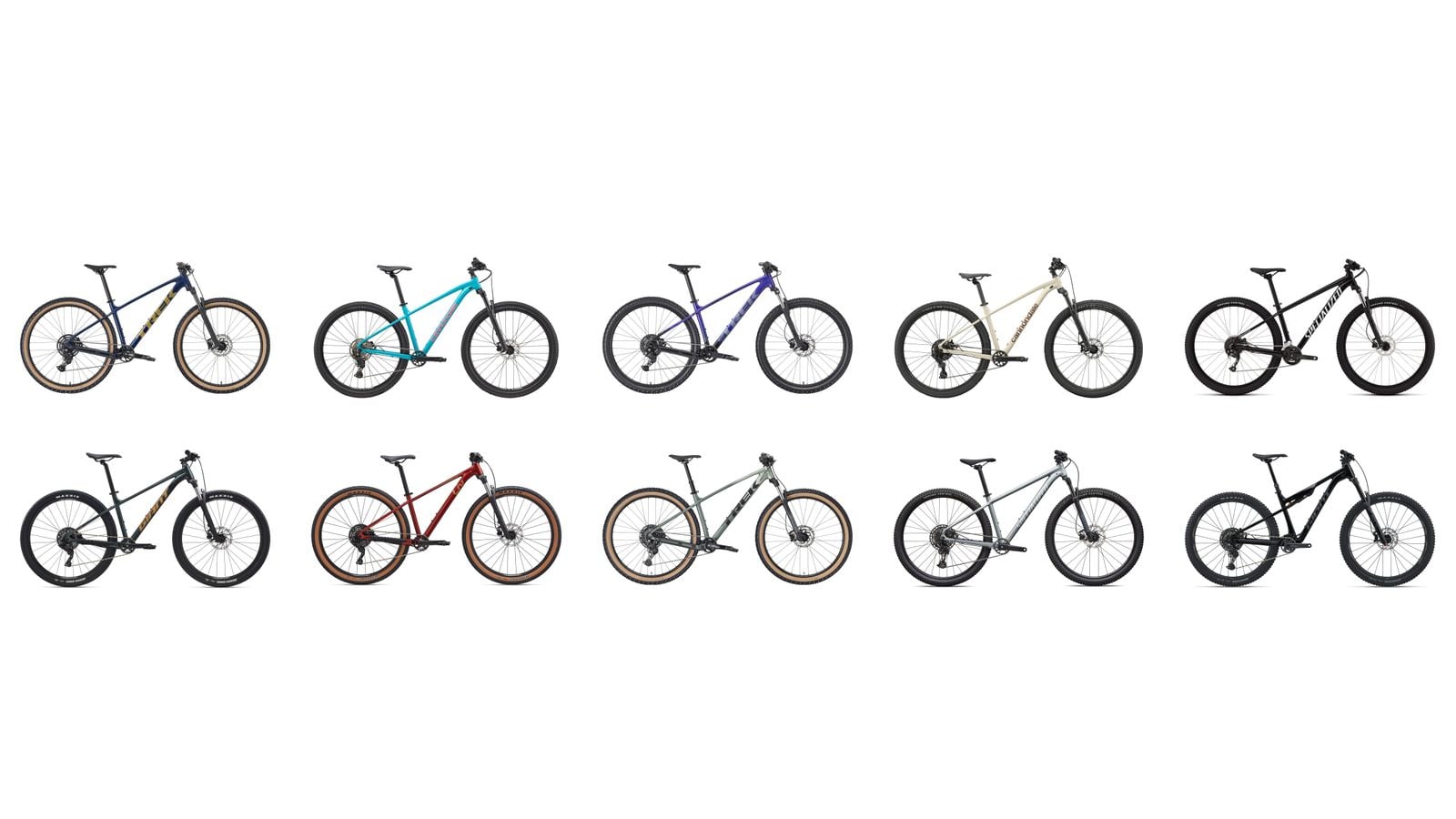
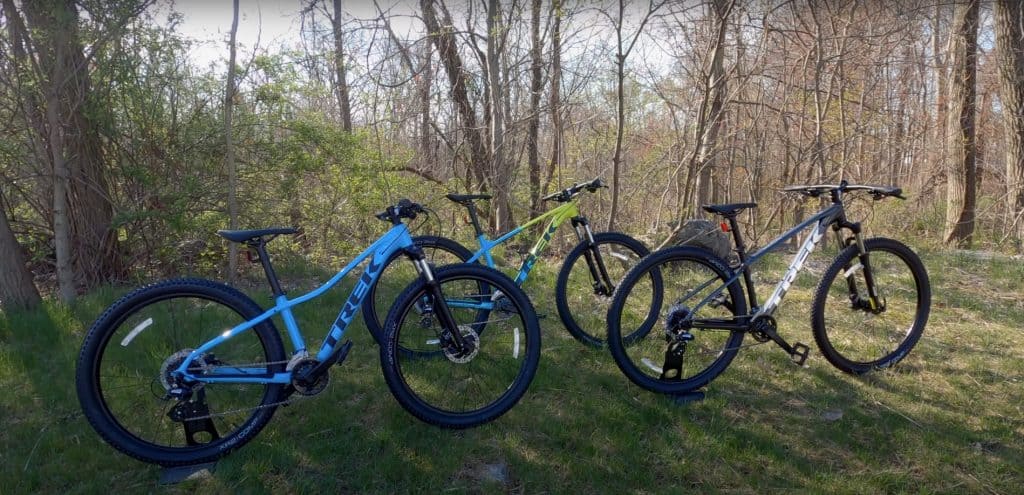
- Trek Marlin 4 and Marlin 5: the closest new alternatives. The Marlin 4 is $599.99 with Shimano ESSA 8-speed; the Marlin 5 is $799.99 with a 100 mm fork, Shimano CUES 1×9 and hydraulic brakes.
- Cannondale Trail 8 and Cannondale Trail 5: another bike-shop hardtail family with an entry model and a more trail-ready step up.
- Giant Talon 3: Giant’s budget hardtail.
- Diamondback Sorrento: another budget recreational hardtail.
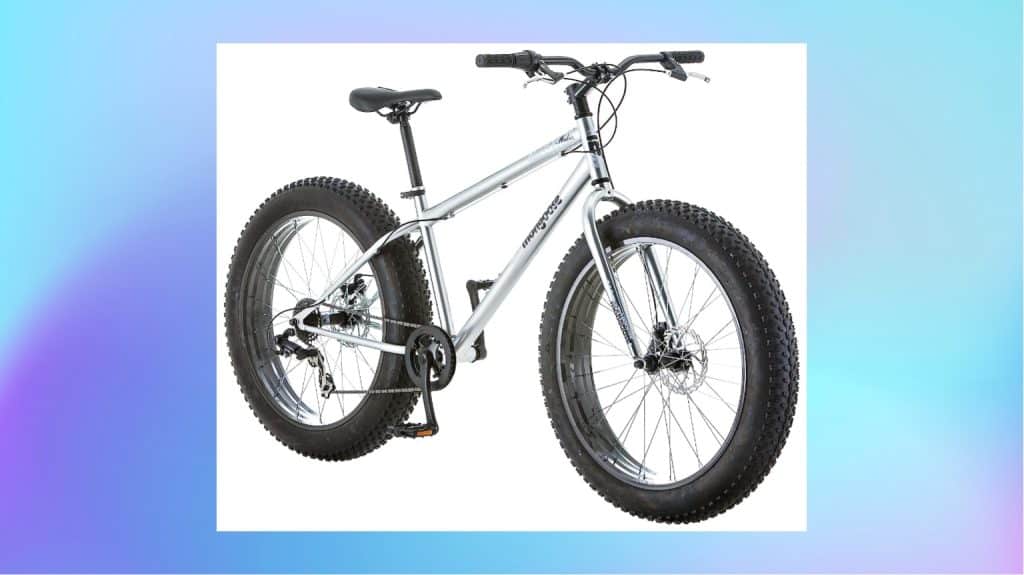
- Mongoose Dolomite: a fat bike for sand and snow rather than trails.
- Heavier riders: GT doesn’t publish a rider weight limit for the Aggressor, so see our best bikes for heavy riders, where every pick has a published limit.
- Not sure? Bike Match checks your height, weight and budget against 200+ bikes.
The verdict: should you buy the GT Aggressor Sport?
Buy one if it’s cheap, fits you and checks out mechanically, and your riding is paths, gravel and easy dirt. It has the basics right: a decent frame, disc brakes, two wheel sizes and a very low climbing gear.
Don’t buy one if you want to ride real mountain bike trails, or if the asking price is close to a new Trek Marlin 4. The short fork, 3×7 drivetrain and steep head angle hold it back on rough ground, and a used Aggressor has no frame warranty. In that case, a new Trek Marlin is the better buy.
Frequently asked questions
Is the GT Aggressor Sport a good mountain bike?
It’s a good recreational bike for bike paths, gravel, fire roads and easy dirt trails. It isn’t built for technical singletrack: the 75 mm coil fork, quick-release wheels and steep 68–68.5° head angle are designed for comfort and low cost rather than rough trails.
Is the GT Aggressor Sport discontinued?
GT’s US website no longer lists the Aggressor (checked November 12, 2026). GT’s Australian product page showed the same 2021 spec into early 2023, so most bikes for sale now are used or leftover stock from those years.
What size GT Aggressor Sport do I need?
GT didn’t publish a height chart for it. Choose a frame whose standover is a few centimeters below your inseam, then compare reach: the Aggressor runs about one size shorter than a modern trail hardtail with the same letter. The 29″ L, for example, has the same 44 cm reach as a current Trek Marlin M.
Should I get the 27.5″ or 29″ Aggressor Sport?
Get 27.5″ if you’re on the shorter side or want a smaller, easier-handling bike; it has a lower front end and slightly less standover than the 29″ frame in the same size. Get 29″ if you’re taller or ride longer distances, since bigger wheels roll over bumps more easily.
How much does the GT Aggressor Sport weigh?
GT didn’t publish a weight for the Aggressor Sport on its product pages. Weigh a used bike yourself with a luggage scale if weight matters to you.
What is the GT Aggressor Sport weight limit?
GT doesn’t publish a rider weight limit for the Aggressor on the pages we checked. If you’re over about 250 lb, choose a bike with a published limit; our best bikes for heavy riders guide lists bikes rated from 250 to 550 lb.
Can you upgrade the fork on a GT Aggressor Sport?
Yes, but it rarely makes sense. A replacement needs a straight 1 1/8″ steerer, a quick-release axle and the right wheel size. A good air fork costs a large share of what the whole bike is worth, so most riders are better off saving toward a bike with a better fork.
GT Aggressor Sport vs Trek Marlin 4: which is better?
The Trek Marlin 4 is the better new bike: it’s current, sold with a dealer warranty, and costs $599.99 on Trek’s US site. A used Aggressor Sport only makes sense if it’s clearly cheaper and in good condition.
Specs and geometry are from GT’s Aggressor Sport product pages (2021 and early 2023, viewed through the Internet Archive). GT’s current US website and warranty terms, and Trek’s prices, were checked on November 12, 2026.
Alek Asaduryan
Alek is the founder of YesCycling and has been riding bikes and in the cycling industry since 1991. Since then, his mission is to make cycling more accessible to everyone.