How to Choose an Electric Bike – Complete Buying Guide
How to choose an electric bike in 2026: e-bike classes and the law, hub vs. mid-drive motors, battery size and real range, UL 2849 safety, fit, weight and budget.
Updated · 12 min read
In this article
- The short version
- 1. Decide what you need the bike for
- 2. Understand e-bike classes and the law
- 3. Choose the motor: hub or mid-drive
- 4. Get the battery and range right
- 5. Insist on safety certification
- 6. Check the fit and the weight
- 7. Look at brakes, tires and suspension
- 8. Count what comes in the box
- 9. Decide where to buy
- How much should you spend?
- Looking after an e-bike
- Frequently asked questions
- Sources
Electric bikes now come in every shape, from 41 lb road-style hybrids to folding bikes, cargo bikes and fat-tire bikes that weigh almost 70 lb. Prices run from under $1,000 to well over $4,000, and the spec sheets are full of numbers (watts, newton-meters, watt-hours, classes) that are hard to compare.
This guide explains what those numbers mean and which ones matter for the way you’ll ride. We use real figures from bikes we checked on makers’ US websites in November 2026 as examples, and we link to the laws and safety guidance behind our advice. We haven’t tested these bikes for this guide.
The short version
- Decide what the bike is for: commuting, fitness, errands, carrying kids, trails or travel.
- Pick the class you need: Class 1 or 3 if you want pedal assist only, Class 2 if you want a throttle. Check your state’s rules.
- Choose the motor type: a hub motor for flat routes and a lower price, a mid-drive for hills and a natural feel.
- Size the battery for your longest regular ride, then add a margin for cold, hills and age.
- Check the safety certification: UL 2849 for the bike’s electrical system, UL 2271 for the battery.
- Make sure it fits: rider height range, weight limit and how much the bike weighs if you have stairs.
- Look at what’s included: lights, fenders, rack, lock, and who will service it.
1. Decide what you need the bike for
Start with the ride, not the bike. The same budget buys very different machines depending on the job:
- Commuting: a hybrid-style e-bike with lights, fenders and a rack, like the Trek FX+ 2 or Lectric XPress2. See our best electric bikes for commuting.
- Relaxed riding and errands: an upright comfort or cruiser e-bike with a step-through frame, such as the Electra Townie Go! or Aventon Pace 5. Older riders may like our e-bikes for seniors.
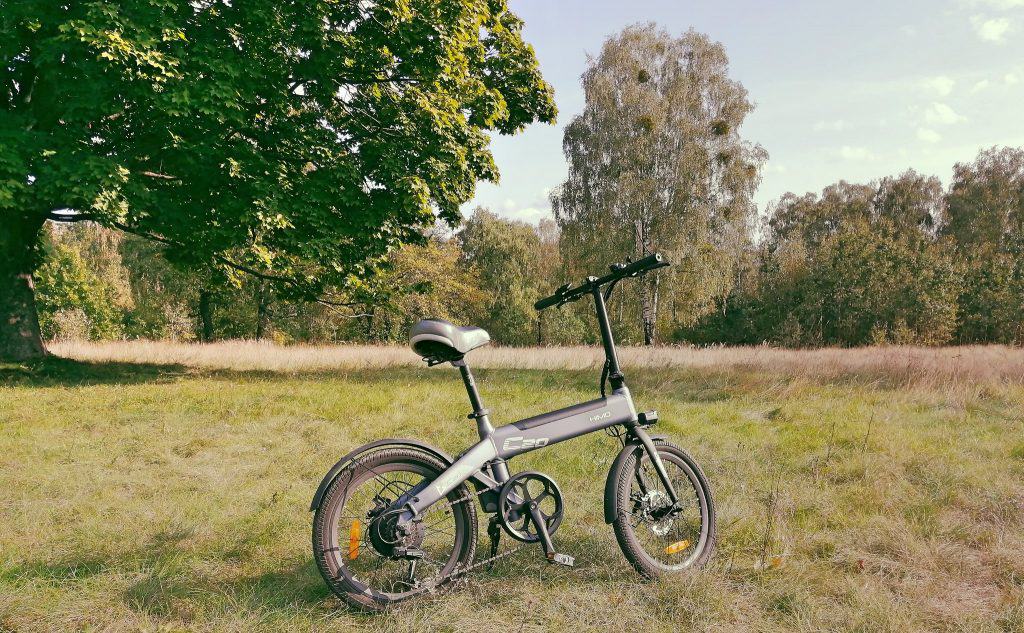
- Train or small-apartment life: a folding e-bike. Some fold small and roll (the Tern Vektron, 52.7 lb), others fold mainly to fit in a car trunk (the Lectric XP4, 68 lb).
- Carrying kids or cargo: a cargo e-bike with a long rack, a low center of gravity and a high weight limit, like the Tern Quick Haul D8.
- Trails: an electric mountain bike with real suspension and a mid-drive motor. See our best electric mountain bikes.
2. Understand e-bike classes and the law
Federal law defines a “low-speed electric bicycle” as a two- or three-wheeled vehicle with working pedals, an electric motor under 750 W, and a top speed under 20 mph on motor power alone with a 170 lb rider. That definition decides how e-bikes are regulated as consumer products. Where and how you can ride them is up to your state and city.
Most US states use a three-class system:
| Class | How the motor helps | Motor stops helping at |
|---|---|---|
| Class 1 | Only while you pedal | 20 mph |
| Class 2 | While you pedal, or with a throttle | 20 mph |
| Class 3 | Only while you pedal (usually with a speedometer) | 28 mph |
Why it matters: some bike paths and trails allow Class 1 only, some states set minimum ages for Class 3, and a “bike” that goes faster than these classes allow, or can be unlocked to, may legally be a motor vehicle that needs registration and insurance. Several bikes now let you switch classes (the Velotric Discover 3 and Lectric XPress2 do, for example), which is handy if you set them up legally for where you ride. Our guide to telling an e-bike from an e-moto covers the 2026 law changes in California and Washington and how to check a bike before you buy.
3. Choose the motor: hub or mid-drive
Hub motors
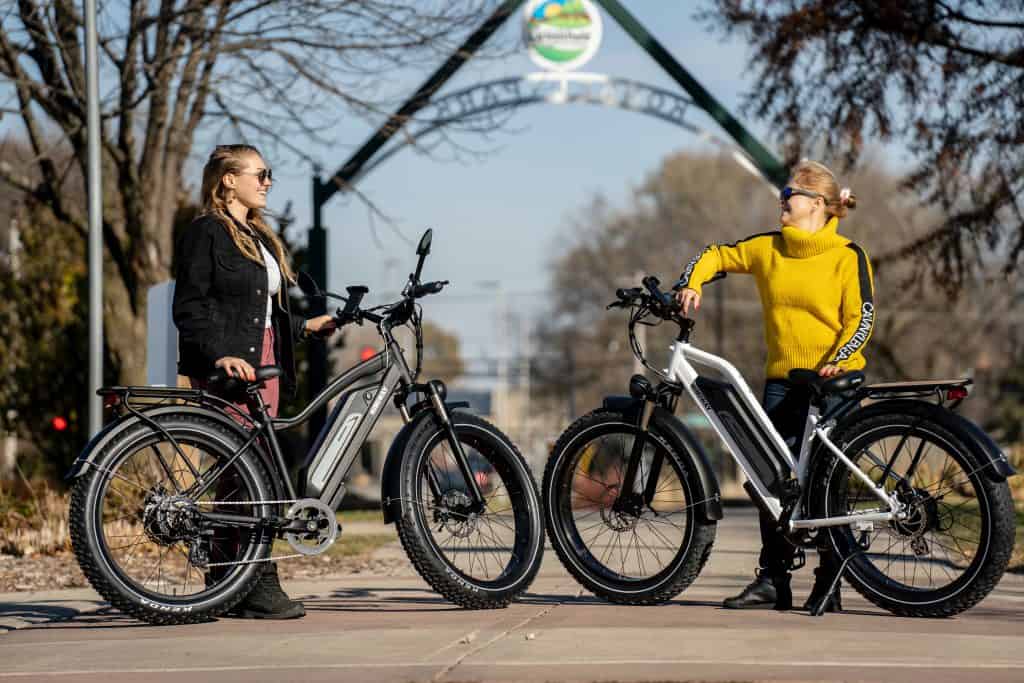
A hub motor sits in the center of the rear wheel (sometimes the front). It’s simple, cheaper, works independently of your gears, and usually comes with a throttle. Most e-bikes under $2,000 use one: the Lectric XPress2 has a 750 W rear hub with 85 Nm of torque, and the Aventon Level 4 has an 80 Nm hub. Hub motors are fine for flat and rolling routes. On long, steep climbs they can feel less efficient because they can’t use the bike’s gears to stay in their sweet spot, and they make the rear wheel heavier and harder to remove for a flat.
Mid-drive motors
A mid-drive sits at the pedals and drives the chain, so it uses the bike’s gears just like your legs do. That makes it better on steep hills and with heavy loads, and it tends to feel more like a normal bike. Mid-drives from Bosch, Shimano and Specialized are common on dealer bikes, such as the Bosch motor in the Tern Vektron and the 105 Nm Specialized 3.1 motor in the Turbo Vado 3 EVO. They cost more, and they wear the chain and cassette faster because the motor’s power goes through them.
Watts, peak watts and torque
Motor power is quoted in two ways. Nominal (continuous) power is what the motor can sustain, and it’s the number laws refer to. Peak power is a short burst: the Lectric XPress2’s motor is rated 750 W but peaks at 1,310 W, and the Velotric Discover 3’s 750 W motor peaks at 1,100 W. Torque, in newton-meters (Nm), tells you more about how a bike pulls away from a stop and climbs. As a rough guide from current bikes, 50–65 Nm feels gentle and natural, 75–85 Nm is strong, and 100 Nm or more is mountain-bike territory.
Torque or cadence sensor
The sensor decides how the motor responds. A cadence sensor turns the motor on when the pedals turn, at a set level for each assist mode, which can feel like being pushed. A torque sensor measures how hard you push and adds power in proportion, which feels smoother and more like riding a regular bike. Torque sensors used to be limited to expensive bikes, but now appear on cheaper ones too, like the $999 Lectric XP4 and the Cannondale Treadwell Neo.
4. Get the battery and range right
Battery capacity is measured in watt-hours (Wh), which is the battery’s voltage times its amp-hours. A 48 V, 14 Ah battery like the XPress2’s holds 48 × 14 = 672 Wh. More watt-hours means more range, but also more weight and cost.
Range claims are best-case figures, usually in the lowest assist mode with a light rider on flat ground. The makers’ claims for current commuter e-bikes work out to roughly 6 to 11 Wh per mile. In real riding you’ll use more in cold weather, on hills, into a headwind, with cargo, and in higher assist modes. A practical approach:
- Take your longest regular ride (a round-trip commute, say).
- Double it to cover cold days, hills and a battery that loses capacity as it ages.
- Choose a bike whose claimed range covers that number.
For most riders, 500 to 750 Wh is plenty. Bigger batteries, like the 840 Wh pack in the Turbo Vado 3 EVO, make sense for long commutes or if you can only charge every few days. Lighter, smaller batteries, like the 250 Wh pack in the Treadwell Neo 2, suit short rides where low weight matters more.
Also check whether the battery comes out. A removable battery lets you charge it indoors when the bike lives in a garage or bike room, and take it with you to deter theft.
5. Insist on safety certification
Lithium-ion battery fires are the biggest safety concern with e-bikes, and the US Consumer Product Safety Commission urges buyers to choose bikes and batteries certified to the relevant safety standards. Two matter most:
- UL 2849 covers the e-bike’s whole electrical system: battery, charger, motor and controller.
- UL 2271 covers the battery pack itself.
Look for a bike certified to UL 2849 by an accredited lab, not just one whose cells or parts are “UL tested”. Some states now require it in some form; our e-bike vs. e-moto guide covers California’s battery rules.
The US Consumer Product Safety Commission’s advice on charging is simple: be present while the battery charges, never charge it while you’re asleep or away from home, use only the charger the maker supplied or recommends, and don’t use a battery pack that has been modified or rebuilt with used cells. Don’t throw a lithium battery in the trash; take it to a battery recycler or hazardous waste site.
6. Check the fit and the weight
E-bikes are heavy. The bikes in our commuter roundup weigh from 41 lb (Specialized Turbo Vado SL 2) to 68.5 lb (Aventon Level 4 REC). That doesn’t matter much while you ride, but it matters a lot if you have to carry the bike up stairs, lift it onto a car rack, or push it with a flat battery. If any of those apply, put weight near the top of your list.
Check three published numbers before you buy:
- Rider height range. Some makers cover it with several frame sizes (Trek’s FX+ 2 fits 5′1″ to 6′6″ across S to XL), others with an adjustable one-size frame (Tern’s Vektron fits 4′10″ to 6′5″).
- Weight limit. Read it carefully: some makers give a total for bike, rider and cargo (Trek lists 300 lb total), some give a payload for rider and cargo (Lectric lists 330 lb), and some give both (Tern lists a 231 lb rider limit and a 275 lb total for the Vektron). If you’re a heavier rider, see our e-bikes for heavy riders.
- Frame style. A step-through frame is easier to get on and off, especially with a heavy bike, a rear rack load or in work clothes.
7. Look at brakes, tires and suspension
An e-bike is heavier and faster than a regular bike, so brakes matter more. Hydraulic disc brakes are now standard on most good e-bikes, and many use larger 180 mm rotors (the Trek FX+ 2, Lectric XPress2 and XP4 all do) for more stopping power. Mechanical disc or rim brakes are a reason to look elsewhere unless the bike is light and slow.
Wider tires (2″ and up) smooth out rough roads and add stability, and puncture-resistant tires are worth having on a bike that’s hard to fix at the roadside. A suspension fork and a suspension seatpost make a big difference on broken pavement; on smooth bike paths, they’re less important and add weight.
8. Count what comes in the box
Two bikes at the same price can be very different value once you add the extras. Lights, fenders, a rear rack, a kickstand and a bell can easily add $200 or more if you buy them separately. Check whether the bike includes:
- Integrated front and rear lights (ideally with a brake light; some, like the Trek FX+ 2 and Velotric Discover 3, add turn signals)
- Full fenders and a rear rack, with its load rating
- A display that shows speed, assist level and battery, and whether an app is needed
- Theft protection: a battery lock, a frame lock, or GPS tracking (Aventon’s and Specialized’s systems are examples; check whether tracking needs a paid plan)
9. Decide where to buy
Bike shops sell brands like Trek, Specialized, Cannondale, Giant and Tern. You pay more, but you can test ride, the shop assembles and adjusts the bike, and you have somewhere to take it for warranty claims and repairs. Motors from Bosch, Shimano and Specialized are widely supported by dealers.
Direct-to-consumer brands like Lectric, Aventon and Velotric sell online, often for much less. The bike arrives in a box and you finish assembly. Before buying, check the warranty, how parts and repairs work, and whether local shops will work on that brand.
Whichever route you choose, try to ride the bike, or one like it, before you buy. Ten minutes is enough to tell whether the position feels right and the motor’s response suits you.
How much should you spend?
| Budget | What you get | Examples (November 2026) |
|---|---|---|
| Under $1,000 | Hub motor, smaller battery, often folding or fat-tire; hydraulic brakes on the best ones | Lectric XP4 ($999) |
| $1,300–$2,000 | Strong hub motor, 650–750 Wh battery, suspension, lights and often a rack; mostly sold online | Lectric XPress2 ($1,399), Aventon Level 4 REC ($1,799), Velotric Discover 3 ($1,949) |
| $2,000–$3,000 | Dealer-sold bikes with service support; Bosch mid-drives start here | Trek FX+ 2 ($2,299.99), Tern Quick Haul D8 ($2,999) |
| $3,500 and up | Lightweight or powerful mid-drives, big batteries, premium folding and cargo bikes | Specialized Turbo Vado SL 2 4.0 ($3,599.99), Tern Vektron P5i ($4,099) |
For the full list of bikes and specs, see our best electric bikes for commuting and best electric bikes under $1,000.
Looking after an e-bike
- Battery: charge and store it the way the maker’s manual says, keep it out of extreme heat and freezing cold, and check it for damage after a fall. Never charge a swollen, damaged or wet battery.
- Drivetrain: clean and lube the chain regularly; the extra torque wears chains and cassettes faster than on a regular bike, especially with a mid-drive.
- Brakes and tires: check pads and tire pressure often. A heavier, faster bike goes through brake pads sooner.
- Water: e-bikes are generally built to be ridden in the rain (some list water-resistance ratings, like the Velotric Discover 3’s IPX7 battery), but don’t pressure-wash the motor, battery or display.
- Service: have a shop check the bike once or twice a year, and keep the motor’s firmware up to date if the maker offers updates.
Frequently asked questions
What size motor do I need on an electric bike?
For flat or gently rolling routes, a 250–500 W motor with 50–60 Nm of torque is enough. For steep hills, heavy riders or cargo, look for 75 Nm or more, or a mid-drive that uses the bike’s gears. In most states, the motor must be 750 W or less (nominal) for the bike to count as an e-bike.
How far can an electric bike go on one charge?
Makers claim 30 to more than 90 miles for current bikes, depending on battery size and assist level. Real-world range is usually lower, especially in the cold, on hills or in the highest assist mode. Halving the claimed range is a safe planning figure for a demanding route.
Is a throttle worth having?
A throttle (Class 2) helps you get going from a stop, at traffic lights, or if you have knee or hip problems. But some trails and paths don’t allow throttle bikes, and riding on the throttle alone drains the battery quickly. If you mainly want help while pedaling, a Class 1 or Class 3 bike is enough.
Do I need a license or insurance for an e-bike?
In most US states, a Class 1, 2 or 3 e-bike doesn’t need a license, registration or insurance, though some states set age limits or helmet rules. A bike that exceeds the class limits, or can be unlocked to, may count as a motor vehicle. Check your state’s rules before you buy.
Are electric bikes worth it?
For many people, yes. An e-bike makes longer commutes, hills and headwinds manageable, lets you arrive without being sweaty, and can replace some car trips. You still pedal on most e-bikes, so you still get exercise. They cost more than regular bikes and weigh more, so they’re less worth it for short, flat rides where a regular bike works fine.
How long does an e-bike battery last?
It depends on the battery, how it’s charged and stored, and how much it’s used. All lithium-ion batteries slowly lose capacity with age and charge cycles. Check the length of the maker’s battery warranty and follow its charging and storage instructions.
Sources
- 15 U.S. Code § 2085, the federal definition of a low-speed electric bicycle
- PeopleForBikes, electric bicycle policies and laws (the three-class system)
- US Consumer Product Safety Commission, Micromobility Information Center (charging and battery safety)
- Bike specs and prices checked on the makers’ US websites on November 18, 2026: Lectric XPress2, Lectric XP4, Velotric Discover 3, Aventon Level 4 REC, Trek FX+ 2, Specialized Turbo Vado 3 EVO 4.0, Cannondale Treadwell Neo 2 EQ and Tern Vektron P5i
Alek Asaduryan
Alek is the founder of YesCycling and has been riding bikes and in the cycling industry since 1991. Since then, his mission is to make cycling more accessible to everyone.