6 Best Bikes for Back Pain Problems in 2026
The 6 best bikes for back pain in 2026, from the $599.99 Electra Townie 7D to an e-bike, a suspension hybrid and a recumbent trike, plus research-based tips to reduce back pain while cycling. Specs checked on the makers’ sites.
Updated · 14 min read
How we make money: if you buy through a link on this page, we may earn a commission at no extra cost to you. It never decides which bikes we pick. Disclosure
In this article
If your back hurts, cycling can still be one of the easiest ways to stay active: you sit, your legs do the work, and nothing pounds your joints the way running does. The bike matters, though. A road bike folds you forward over low handlebars, and a stiff frame passes every bump straight up your spine. A good bike for back pain lets you sit more upright, reach the bars without stretching, put a foot down easily, and soak up some of the road.
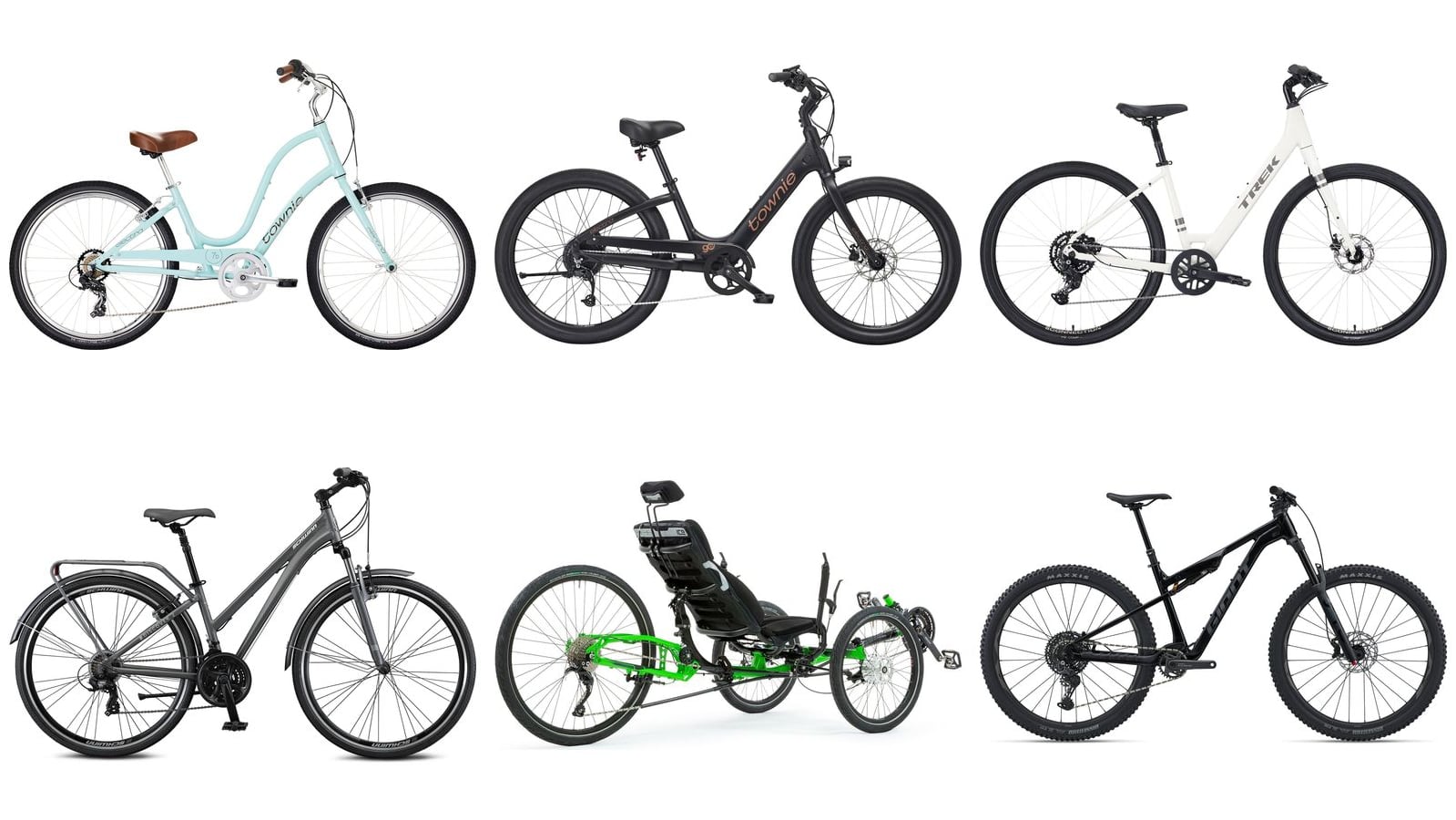
We picked six bikes that do that in different ways: two Electra Townies with Electra’s feet-forward Flat Foot frame (one of them electric), a Trek hybrid with a suspension seatpost, a Schwinn under $500, an ICE recumbent trike you sit in like a chair, and a Giant full-suspension mountain bike for trail riders. We checked every price and spec on the maker’s US website on November 17, 2026. We haven’t ridden these exact bikes for this guide, so we don’t claim to have tested them.
A note before you buy: we’re a cycling site, not doctors. Back pain has many causes, and the right riding position depends on yours. If your pain is severe, getting worse, or came with an injury, see a doctor or physiotherapist before you start riding, and ask them which position suits your back.
The best bikes for back pain at a glance
| Bike | Best for | Price | Riding position | Comfort features | Weight |
|---|---|---|---|---|---|
| Electra Townie 7D Step-Thru | Best overall | $599.99 | Upright, feet forward | Flat Foot frame, sprung saddle, swept-back bar | 31.3 lb |
| Electra Townie Go! | Best e-bike | From $1,799.99 | Upright, feet forward | Motor and throttle, 2.35″ tires, hydraulic brakes | About 52–58 lb |
| Trek Verve 2 Lowstep | Best hybrid | $799.99 | Upright | Suspension seatpost, 45 mm tires, low step-over | 30.4 lb |
| Schwinn Discover 2 Step-Thru | Under $500 | $479.99 | Upright | Suspension fork and seatpost | Not published |
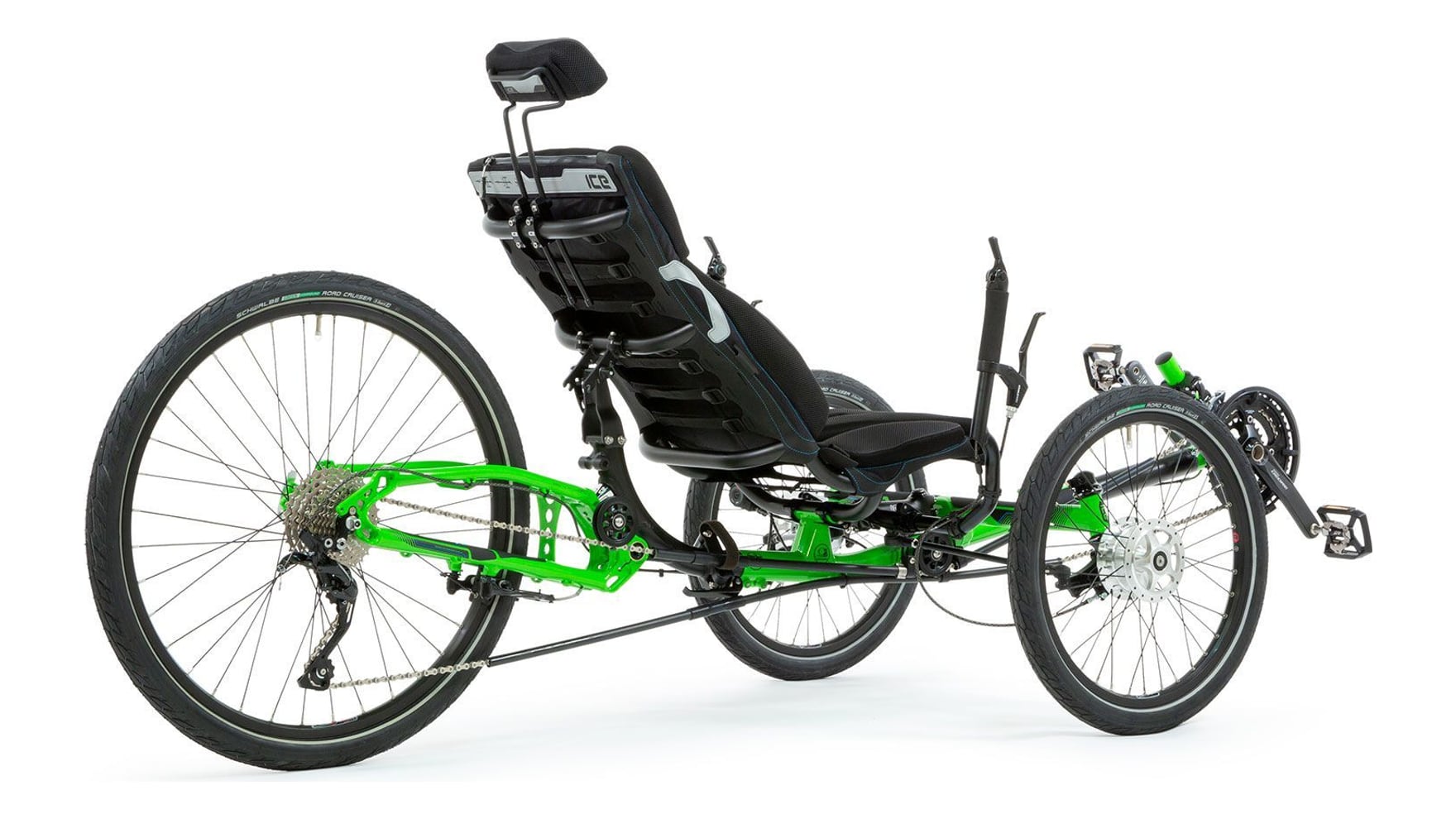
| ICE Adventure | Best recumbent | From $4,400 | Reclined, back supported | Mesh seat, optional suspension, three wheels | From 36.2 lb |
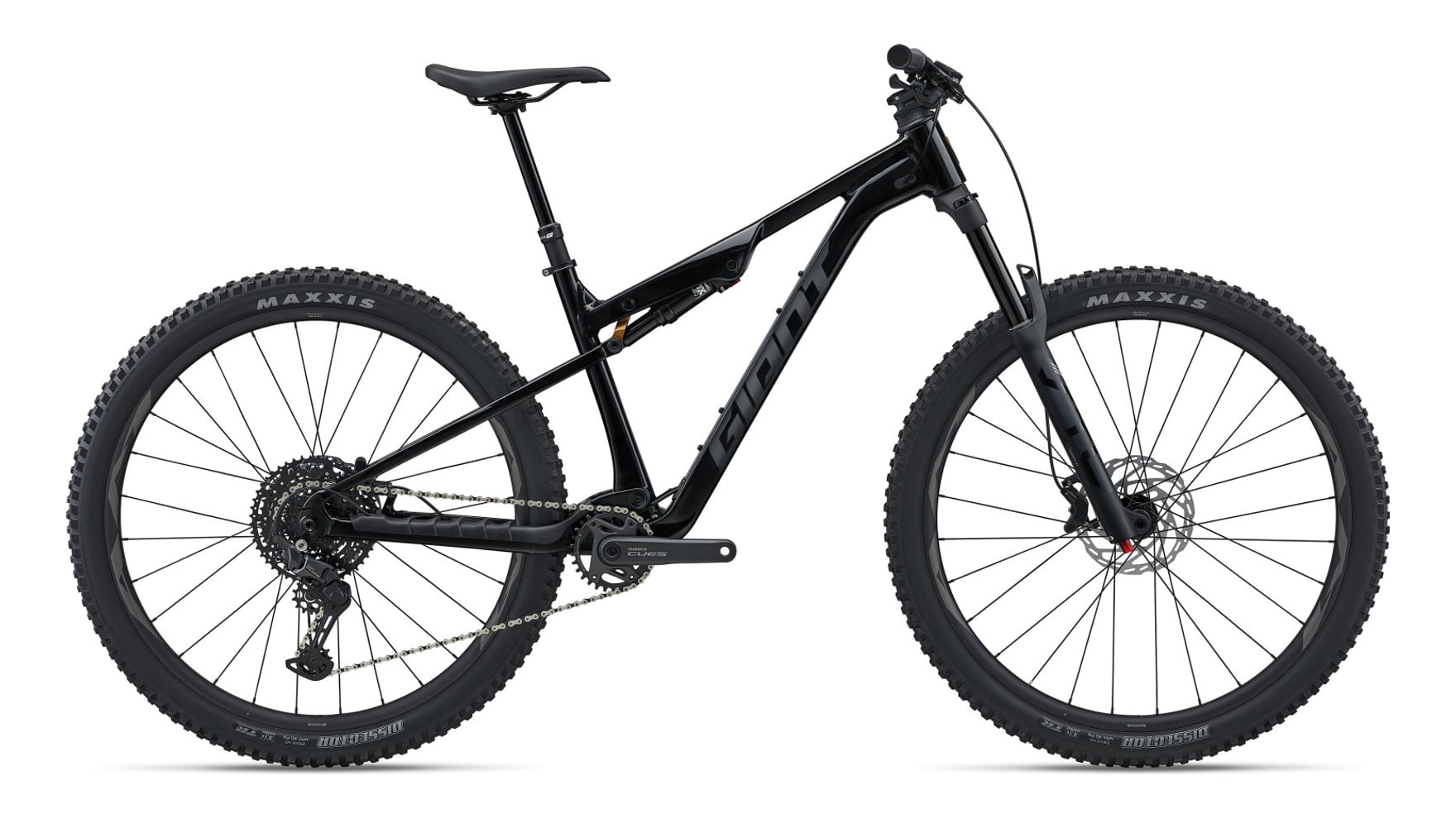
| Giant Stance | Mountain biking | $2,200 | Trail (leaning forward) | 130 mm rear and 140 mm front suspension | Not published |
US prices on the manufacturers’ websites on November 17, 2026; some were on sale. Weights are the makers’ figures.
What changed since our last update: the Electra Townie 7D, Schwinn Discover and ICE Adventure are still here, in their current versions. We replaced the Electra Loft 7D, Rad Power Bikes RadRunner 2 and Co-op Cycles DRT 2.1 with the Electra Townie Go!, Trek Verve 2 Lowstep and Giant Stance, whose prices and specs we could check on the maker’s own site. We also added a section on how to ride with less back pain, based on the research we could find.
Quick picks
6 bikes · tap a name to jump- 1
 Check price
Best overall
Electra Townie 7D Step-ThruWeight Capacity: 300 lbs. total · Riders Height: 4′ 7″ to 6′ 0″
- 2
 Check price
- 3
 Check price
Best hybrid bike for back pain
Trek Verve 2 LowstepWeight Capacity: 300 lbs. total · Riders Height: 4′ 10″ to 6′ 1″
- 4
 Check price
- 5
 Check price
- 6
 Check price
1. Electra Townie 7D Step-Thru
Best overall
- Type
- Comfort Bike
- Frame Material
- Aluminum
- Drivetrain
- Shimano Tourney 7-speed
- Brakes
- Alloy linear-pull
- Weight
- 31.31 lbs.
- Weight Capacity
- 300 lbs. total
- Riders Height
- 4′ 7″ to 6′ 0″
- MSRP
- $599.99
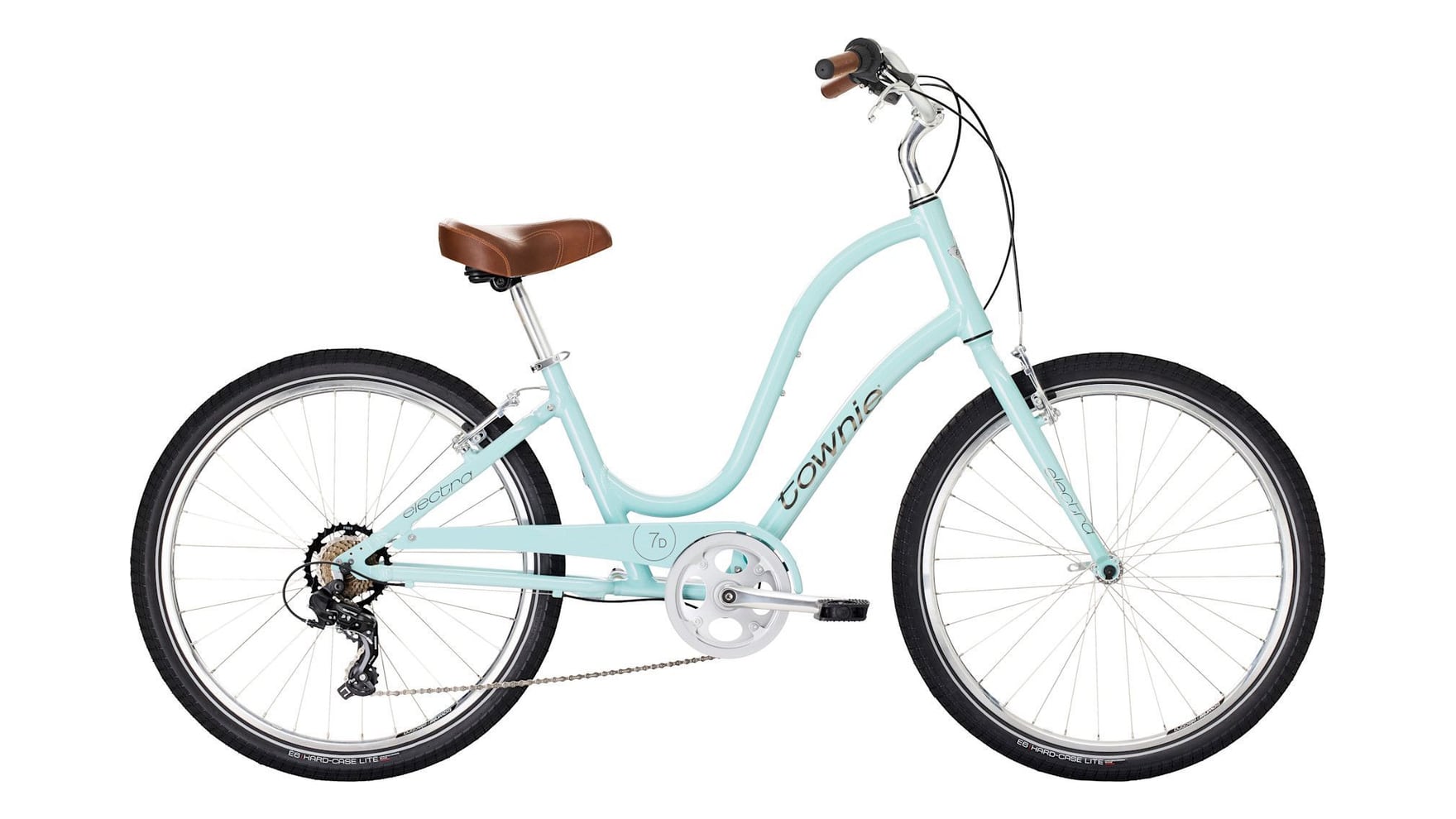
Why it’s here: the Townie is built around Electra’s Flat Foot Technology. The pedals sit further forward than on a normal bike, so you can sit upright, still get good leg extension, and put both feet flat on the ground at a stop without sliding off the saddle. Trek lists a relaxed 67° seat-tube angle, a 25.9″-wide bar with a 4″ rise that sweeps back toward you, hand-stitched grips and a saddle with shock-absorbing elastomers.
Put together, that means you don’t lean over the bars, you don’t stretch to reach them, and you don’t twist or hop to get on and off. Seven Shimano gears handle gentle hills. The aluminum frame keeps it at 31.3 lb, and it comes with 26″ wheels (for riders 4′11″ to 6′0″) or 24″ wheels (4′7″ to 5′5″).
What we like
- Feet-flat, upright position that puts little load on your lower back
- Easy to mount through the low step-through frame
- Sprung saddle and swept-back bar as standard
- 300 lb total weight limit, published by Trek
Drawbacks
- No suspension, so large tires and the saddle do the cushioning
- Rim brakes, which work less well in the wet than discs
- Slow on climbs because of the upright position and seven gears
2. Electra Townie Go!
Best electric bike for back pain
- Type
- Electric Comfort Bike
- Frame Material
- Aluminum
- Motor
- 500 W rear hub, 60 Nm
- Battery
- 520 Wh
- Range
- Up to 50 miles
- Class
- 2 (throttle, 20 mph)
- Brakes
- Tektro hydraulic disc
- Weight
- About 52–58 lbs.
- Riders Height
- 4′ 11″ to 6′ 4″
- MSRP
- $1,799.99
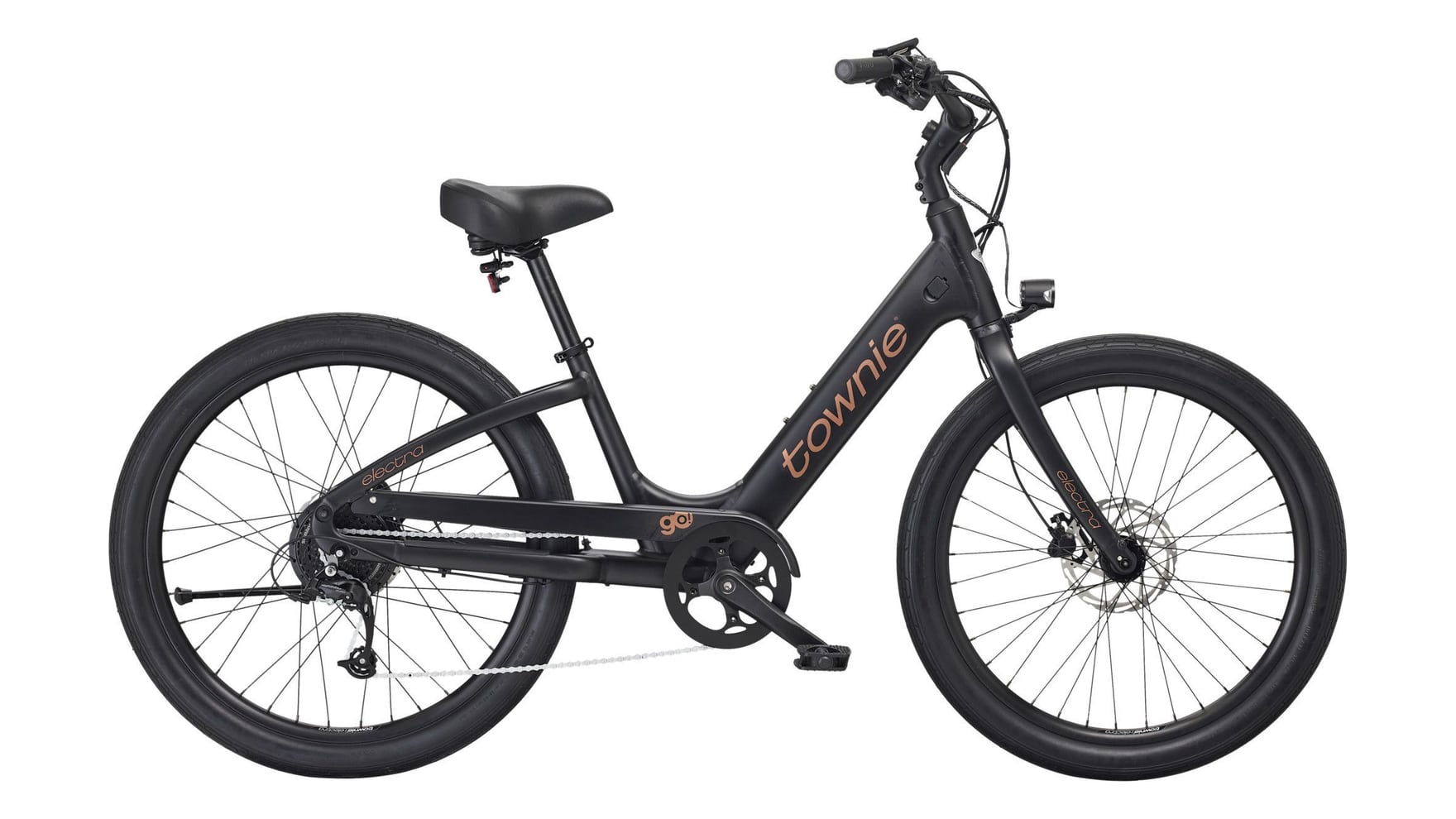
Why it’s here: the hardest part of riding with a sore back is often the effort, not the position: pushing hard up a hill or into a headwind makes you brace your trunk and pull on the bars. The Townie Go! keeps the Townie’s low, feet-forward Flat Foot frame and adds a 500 W rear-hub motor with 60 Nm of torque, a 520 Wh battery and a throttle, so you can ride further while working only as hard as feels comfortable.
The 2026 model has wide 27.5 × 2.35″ tires (26″ on the S-M size) for a softer ride, Tektro hydraulic disc brakes with 180 mm rotors, an 8-speed MicroShift drivetrain, and a 700 mm bar with a 100 mm rise. Trek lists it as a Class 2 e-bike with a top assisted speed of 20 mph. Some colors cost $2,099.99, and Trek also lists a Townie Go! S version.
What we like
- Motor and throttle take the strain out of hills and starts
- Wide 2.35″ tires for comfort
- Hydraulic disc brakes that need little hand force
- Two sizes covering riders 4′11″ to 6′4″
Drawbacks
- Heavy at about 52–58 lb, which is hard to lift onto a car rack if your back is sore
- Three times the price of the Townie 7D
- No suspension fork or seatpost
3. Trek Verve 2 Lowstep
Best hybrid bike for back pain
- Type
- Hybrid Bike
- Frame Material
- Aluminum
- Drivetrain
- Shimano CUES 1×9
- Brakes
- Tektro hydraulic disc
- Weight
- 30.43 lbs. (M)
- Weight Capacity
- 300 lbs. total
- Riders Height
- 4′ 10″ to 6′ 1″
- MSRP
- $799.99
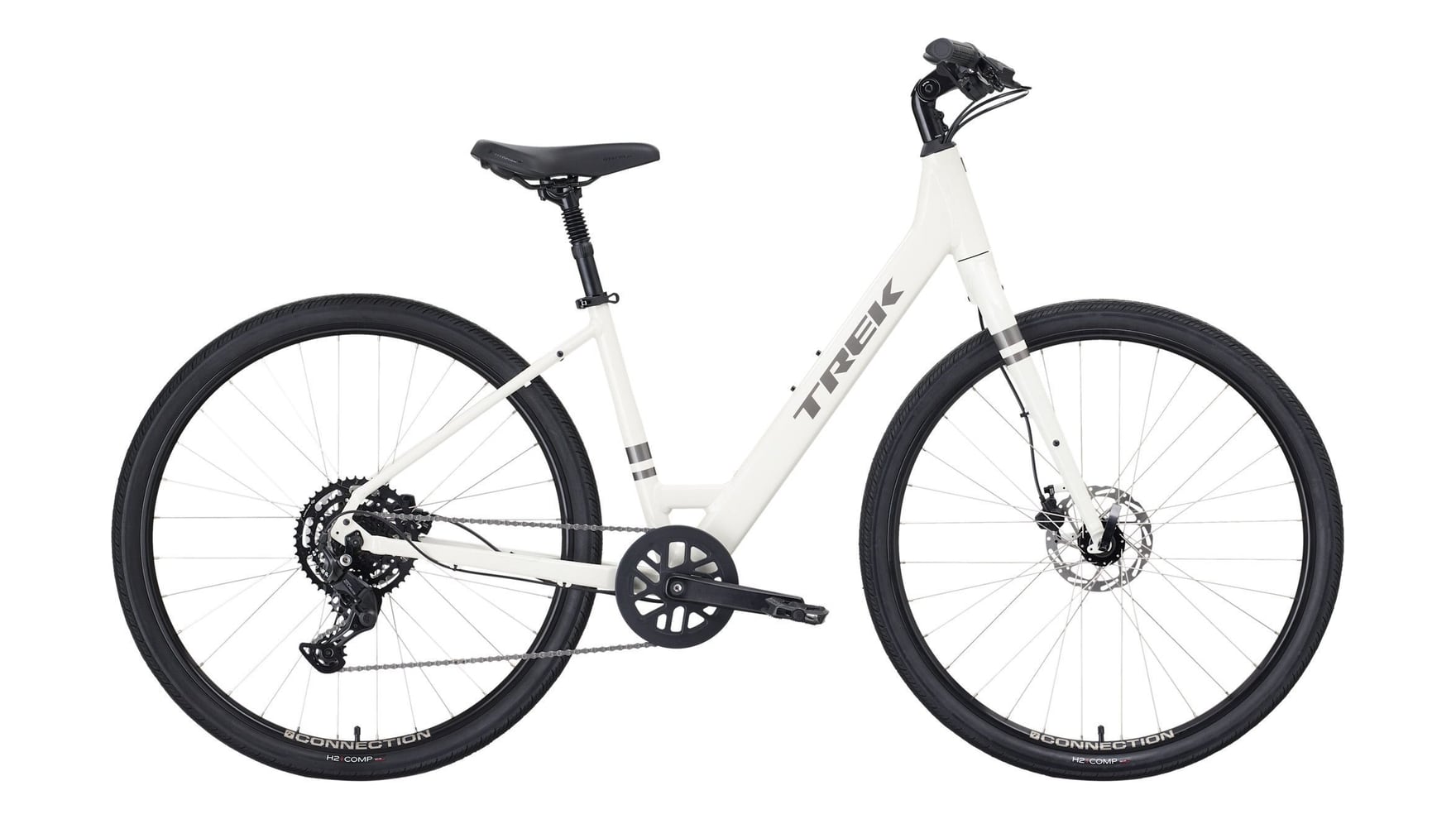
Why it’s here: if you want something quicker and lighter than a cruiser, the Verve is Trek’s comfort hybrid. It keeps you fairly upright, and the Verve 2 adds the one comfort part we’d look for first on a bike for back pain: an adjustable suspension seatpost, which takes the edge off bumps right under you. Trek pairs it with a Bontrager Boulevard saddle, Trek Ergonomic Comp grips and 700 × 45 mm Bontrager H2 Comp tires, which are wide for a hybrid.
It also has Tektro hydraulic disc brakes, a simple 1×9 Shimano CUES drivetrain with a wide 11–46 cassette for easy climbing, and rack and fender mounts. The fork is rigid, so your hands get less cushioning than your seat. The Verve 1 ($599.99) and Verve 3 ($999.99) are the cheaper and better-equipped options; check which ones include the suspension seatpost.
What we like
- Suspension seatpost and wide 45 mm tires
- Low step-through frame in four sizes (XS to L)
- Hydraulic disc brakes and a wide-range 1×9 drivetrain
- Light for a comfort bike at 30.4 lb
Drawbacks
- Rigid fork, so no cushioning at the front
- Less upright than the Townie
4. Schwinn Discover 2 Step-Thru
Best under $500
- Type
- Hybrid Bike
- Frame Material
- Aluminum
- Wheels
- 700c
- Brakes
- Alloy linear-pull
- MSRP
- $479.99
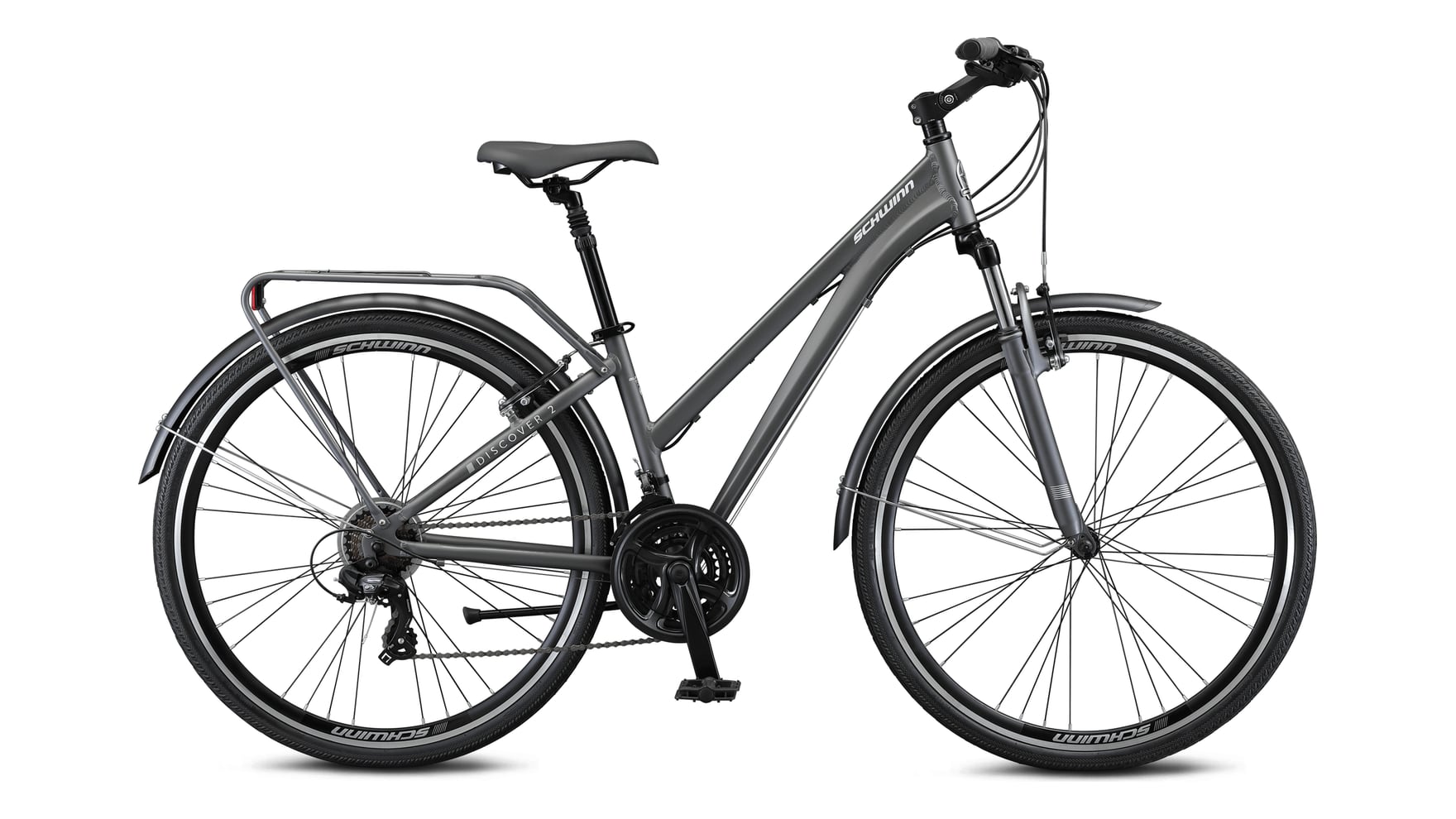
Why it’s here: it’s the cheapest bike here with both a suspension fork and a suspension seatpost. Schwinn pairs them with a hybrid saddle, ergonomic grips and an upright riding position. It also comes with fenders and a rear rack, so you can carry a bag on the bike instead of on your back.
Schwinn lists it at $479.99, down from $635.99, on its own site. The step-through frame comes in one 15″ size, so check Schwinn’s fit guidance for your height before you order.
What we like
- Suspension fork and seatpost under $500
- Fenders and rear rack included
- Upright position and step-through frame
Drawbacks
- One frame size
- No published weight or weight limit
- Rim brakes rather than discs
5. ICE Adventure
Best recumbent trike for back pain
- Type
- Recumbent Trike
- Seat Height
- 13.5″
- Seat Recline
- 38° to 51°
- Weight
- From 36.2 lbs.
- Weight Capacity
- 275 lbs. rider
- MSRP
- From $4,400
Why it’s here: on a recumbent trike, you don’t sit on a saddle or lean on the bars. You sit in a reclined seat that supports your whole back, with your legs out in front, and three wheels mean you never have to balance or put a foot down at a stop. For riders who can’t get comfortable on any upright bike, it’s the biggest change in position you can make.
The Adventure is ICE’s touring trike. Its seat is 13.5″ high and 15″ wide, with three seat options and a recline from 38° to 51°. You can choose a 20″ or 26″ rear wheel, a rigid frame, rear suspension or full suspension, Shimano electric assist, and an automatic gear-shifting option. ICE offers Helping Handles to make getting in and out easier, and the frame folds for transport. The rider weight limit is 275 lb.
It’s expensive, and it’s low: the seat is close to the ground, so getting in and out takes some bending. If that’s a problem, ask a recumbent dealer about trikes with a higher seat. Catrike’s Villager, for example, is built around a high seat and costs $3,250 MSRP. Try one before you buy if you can.
What we like
- Full back support in a reclined, adjustable seat
- No balancing and no saddle pressure
- Optional suspension and e-assist
- Folding frame for transport
Drawbacks
- From $4,400, the most expensive bike here
- Low seat, which takes bending to get into
- About 32″ wide, too wide for some paths, doors and bike racks
6. Giant Stance
Best mountain bike for back pain
- Type
- Full-Suspension Mountain Bike
- Frame Material
- Aluminum
- Travel
- 130 mm rear, 140 mm fork
- Drivetrain
- Shimano CUES 1×10
- Riders Height
- 5′ 4″ to 6′ 6″
- MSRP
- $2,200
Why it’s here: if you ride trails, a hardtail sends every root and rock through the saddle into your lower back. A full-suspension bike absorbs much of that before it reaches you. The Stance is an affordable full-suspension trail bike from a major brand, with 130 mm of rear travel, a 140 mm air fork, wide 29 × 2.4″ Maxxis tires you can run tubeless at lower pressure, and a dropper post, so you can lower the saddle on descents instead of hovering behind it.
It still puts you in a forward-leaning trail position, so it isn’t the bike for an acutely sore back. It’s for riders who want to keep riding trails and reduce the jarring that comes with it.
What we like
- Suspension front and rear with an air fork
- Wide tubeless-ready tires and a dropper post
- Hydraulic disc brakes with 180 mm rotors
Drawbacks
- Forward-leaning position, unlike the other bikes here
- No size below S and no published weight
How we chose these bikes
We looked for current models, sold in the US with prices and specs on the maker’s own website, that address the things that most often make cycling hurt for people with back pain:
- Riding position: an upright or reclined position with a short reach to the bars scored highest.
- Getting on and off: step-through frames and feet-forward geometry, so you don’t swing a leg high or hop off the saddle at every stop.
- Shock absorption: suspension seatposts and forks, wide tires and sprung saddles.
- Effort: low gears, and an electric option for riders who need help on hills.
- Published fit data: rider height ranges and weight limits where the maker lists them.
We included one recumbent and one mountain bike because some readers can’t get comfortable on any upright bike, and others want to keep riding trails.
What makes a bike good for back pain
An upright riding position
The further you lean forward, the more your lower back has to round and hold you there. Comfort bikes, cruisers and most hybrids put your torso closer to vertical, with handlebars that rise and sweep back toward you. Road bikes and most mountain bikes do the opposite. A systematic review of low back pain in cyclists found that cyclists with back pain tend to ride with more flexion in the lower back (Streisfeld et al., 2017), so a position that asks for less of it is a reasonable place to start.
Feet-forward and step-through frames
Swinging a leg over a high top tube, or hopping off the saddle to put a foot down, are awkward movements for a sore back. A step-through frame lets you walk into the bike. Feet-forward designs like Electra’s Flat Foot frame move the pedals forward so you can reach the ground while still seated. Our best comfort bikes guide has more bikes built this way.
Something to absorb bumps
A suspension seatpost cushions the bumps that reach your spine through the saddle; a suspension fork mostly helps your hands, arms and shoulders. Wide tires at moderate pressure help both, and they’re the cheapest comfort upgrade there is. A wider, sprung saddle helps in an upright position, where more of your weight is on your seat. See our guide to wide, cushioned bike seats.
Low gears or a motor
Pushing big gears and pulling on the bars makes you brace your trunk. Low gears let you spin up hills, and an e-bike lets you choose how hard you work. If you’re weighing up an e-bike for that reason, our best electric bikes for seniors guide covers more low-step models.
Recumbents
A recumbent supports your back with a seat instead of making your core hold you up. Two-wheel recumbents still need balance; three-wheel trikes don’t. They’re expensive, low and wide, so try one at a dealer before you buy.
How to reduce back pain while cycling
The bike is only part of it. The same bike can feel fine or painful depending on how it’s set up and how you ride it.
Get the saddle height right
A saddle that’s too high makes your hips rock from side to side on every pedal stroke, which can strain your lower back. A saddle that’s too low cramps your hips and knees. As a starting point, your leg should be almost straight, with a slight bend at the knee, when the pedal is at the bottom of its stroke.
Check the saddle angle
The angle of your saddle changes how your pelvis and lower spine line up. A 1999 study used X-ray imaging of riders on sports, mountain and city bikes and found that tilting the saddle’s nose slightly down reduced the strain at the base of the spine. When the researchers adjusted the saddles of club cyclists who had lower back pain, more than 70% reported a major improvement (Salai et al., 1999). It was a small, older study without a control group, so treat it as a reason to try a level or slightly nose-down saddle, not a guaranteed fix. Change the angle in small steps: tilt it too far and you’ll slide forward and push on the bars with your hands.
Bring the handlebars closer and higher
If you’re stretching to reach the bars, your back takes the strain. The 2017 review found evidence that riders with lower handlebars bent further at the base of the spine while cycling (Streisfeld et al., 2017). A shorter stem, a stem with more rise, or a swept-back bar brings the bars toward you. On many comfort bikes and hybrids, the stem angle can be adjusted. A professional bike fit is the most reliable way to get this right; here’s what a bike fit costs.
Ride the right size
A frame that’s too big makes you reach; one that’s too small cramps you. Use the maker’s size chart and our bike size charts, and if you’re between sizes on a comfort bike, the smaller one usually gives a shorter, more upright reach.
Strengthen your core and back off the bike
The same review found that cyclists with lower back pain often had less endurance in the muscles that extend the back and differences in how they used their core muscles (Streisfeld et al., 2017). Exercises for the back and core, ideally ones a physiotherapist gives you, can help. The NHS lists walking, swimming, yoga and pilates as activities that may help with back pain.
Start gently and build up
The NHS advises staying active with back pain rather than resting in bed for long periods. Start with short, flat rides at an easy effort, and add time before you add hills. Get off and stretch on longer rides, and change your hand position now and then. For more, read how to prevent injury while cycling.
When to see a doctor
The NHS says back pain usually improves within a few weeks. It advises seeing a GP if it doesn’t improve after a few weeks of home treatment, if it stops you doing day-to-day activities, or if it’s worse at night or doesn’t improve with rest, among other signs. It advises urgent help if back pain comes with numbness or weakness in both legs, loss of feeling around the genitals or bottom, changes in bladder or bowel control, or follows a serious accident. If riding makes your pain worse rather than better, stop and get it checked.
Frequently asked questions
Is cycling good for back pain?
For many people it can be, because it keeps you active without impact, and the NHS recommends staying active with back pain. But more than half of cyclists report lower back pain at some point (Streisfeld et al., 2017), usually because of position and fit. An upright bike that fits you is the place to start, and a doctor or physiotherapist can tell you whether cycling suits your condition.
What type of bike is best for lower back pain?
For most riders, an upright comfort bike or hybrid with a step-through frame, wide tires and a suspension seatpost. If no upright bike is comfortable, try a recumbent trike, which supports your back with a seat.
Are e-bikes good for back pain?
They can help because you control how hard you work, which makes it easier to ride regularly without straining. The drawback is weight: most e-bikes weigh 50 lb or more, which is hard to lift if your back is sore. Look for a low step-through frame and plan where you’ll store it.
Is a stationary bike better than a regular bike for back pain?
A recumbent exercise bike gives you back support and no bumps or traffic, so it’s a sensible way to start, especially while pain is still bad. Once you can ride comfortably, an upright outdoor bike is the natural next step.
Why does my lower back hurt when I cycle?
The most common reasons are fit-related: a saddle that’s too high or tilted nose-up, bars too far away or too low, or a frame that’s the wrong size. Weak back and core muscles and riding too far too soon play a part too. Check your setup first, then build up gradually.
Are recumbent bikes better for your back?
They support your back with a seat and take the weight off your hands and saddle, which helps many riders. They’re also expensive and low, so getting in and out takes some bending. Try one before you buy.
Sources
- Streisfeld GM, Bartoszek C, Creran E, Inge B, McShane MD, Johnston T. Relationship Between Body Positioning, Muscle Activity, and Spinal Kinematics in Cyclists With and Without Low Back Pain: A Systematic Review. Sports Health, 2017; 9(1): 75–79.
- Salai M, Brosh T, Blankstein A, Oran A, Chechik A. Effect of changing the saddle angle on the incidence of low back pain in recreational bicyclists. British Journal of Sports Medicine, 1999; 33(6): 398–400.
- NHS: Back pain, reviewed March 2026.
- Trek: Electra Townie 7D Step-Thru and Townie Go!; Trek Verve 2 Lowstep: specs, weights, sizing and weight limits
- Schwinn Discover 2 Step-Thru
- ICE Adventure; Catrike Villager
- Giant Stance (2026) specifications and sizing
Prices and specs checked on November 17, 2026, on each manufacturer’s US website. Prices change often, especially around sales; check before you buy. This guide is general information, not medical advice.
Alek Asaduryan
Alek is the founder of YesCycling and has been riding bikes and in the cycling industry since 1991. Since then, his mission is to make cycling more accessible to everyone.
2 comments
Brian · March 24, 2024
Hey Alek, I’ve had back problems for a few years now and I just can’t find the right bike that works for me. Every bike I’ve tried has uncomfortable seats and the handlebars are too far away, so I have to lean forward a lot, and it just makes my back hurt more. Can you recommend a good hybrid bike that’s under $1000?
Alek Asaduryan · March 24, 2024
I would directly recommend you the Electra Townie 7D if you don’t have many demands for extras and are relatively strong in the legs. And if you have a larger budget, consider an electric bike from RadPower for around $1000-1200.
Comments are closed. Questions? Get in touch.